Home / Welded vs. Tie Rod Hydraulic Cylinders: Which Should You Choose?
Welded vs. Tie Rod Hydraulic Cylinders: Which Should You Choose?
- Author: GY Hydraulic
- 20+ Years of Manufacturing
Where installation space is limited or customised mounting interfaces are required, welded-type cylinders should be given priority; where standard installation dimensions, ease of disassembly and maintenance, and ease of replacement and procurement are prioritised, tie-rod-type cylinders should be given priority. Both designs can be used in high-pressure applications; the specific choice depends on the model’s rated performance and the operating conditions of the equipment.
Choosing the wrong cylinder can lead to more than just insufficient thrust. Installation interference, seal wear and spare parts lead times can all increase downtime costs. You therefore need to consider the operating pressure, load, installation space, operating environment and maintenance requirements simultaneously. This GY Hydraulic guide compares the differences in structure, performance and maintenance between the two cylinder types to help you make an informed choice based on your specific application.
Table of Contents
What Is the Difference Between Welded and Tie Rod Hydraulic Cylinders?
The key difference between welded-type and tie-rod-type hydraulic cylinders lies in how the cylinder barrel is connected to and secured by the end caps. The cylinder barrel is the tube that contains the hydraulic fluid and allows the piston to move, whilst the end caps seal both ends of the barrel. Welded cylinders primarily rely on welding to form the pressure-bearing structure, whilst tie-rod cylinders rely on external threaded tie-rods to clamp the end caps in place. This affects installation space, maintenance procedures and the ease of replacing parts; however, one cannot simply judge which type offers greater thrust or a longer service life based solely on whether it is ‘welded’ or ‘tie-rod’.
Welded End Caps Create a Compact Integral Body
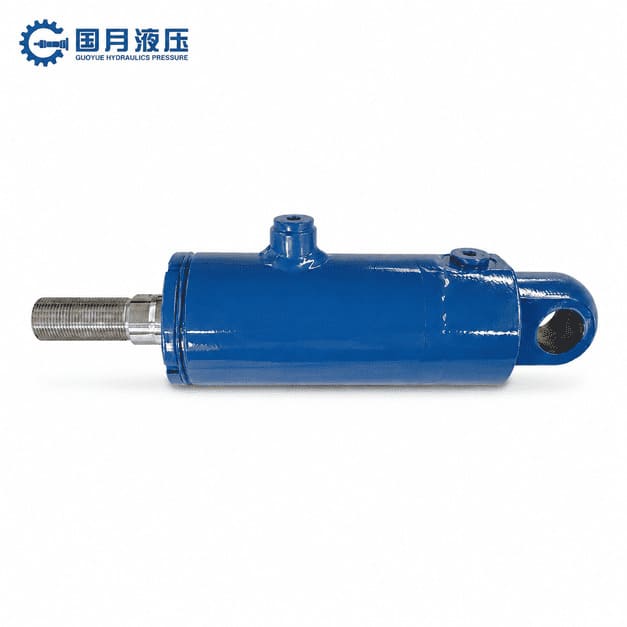
Common welded cylinders have the rear end cap—also known as the cylinder base—welded directly to the cylinder barrel, eliminating the need for full-length tie rods around the exterior of the barrel; consequently, their overall profile is typically more compact. However, ‘welded’ does not mean that both ends are completely welded shut. The end from which the piston rod extends is often fitted with a removable guide and seal assembly: this supports the piston rod and prevents fluid leakage along its surface. This assembly can be secured via threads or retaining rings, and internal components can still be serviced once it has been removed. For example, some of Prince’s welded cylinders utilise a threaded, screw-in guide assembly.
If your cylinder needs to be installed within a narrow equipment frame, or if you wish to minimise external protrusions, a welded design is worth prioritising. However, you should still compare actual installation drawings, including the space occupied by port connections, fittings and mounting lugs, rather than relying solely on the cylinder barrel’s outer diameter. In terms of maintenance, replacing seals does not usually require cutting into the weld; however, if damage occurs at the welded cylinder base or at the cylinder barrel joint, the repair process is more complex than simply replacing a removable end cap. Therefore, before purchasing, it is best to request sectional drawings, assembly and disassembly instructions, and seal kit part numbers to confirm whether the specific model is easy to maintain.
External Tie Rods Clamp Removable End Caps to the Barrel
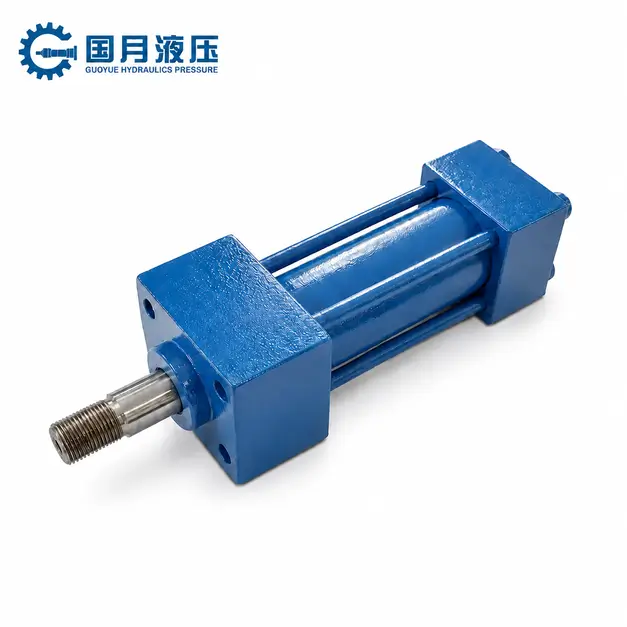
Tie-rod cylinders feature multiple high-strength threaded tie rods arranged on the exterior of the barrel, which clamp the end caps at both ends to the barrel via nuts. The slender rods visible on the exterior are structural tie rods; they are not the piston rods that extend from the cylinder to push the load. During assembly, the tie rods must be set to the specified preload—that is, the clamping force applied by tightening the nuts prior to operation—to ensure the end caps remain securely connected whilst withstanding internal hydraulic pressure; seals at the junction between the barrel and the end caps prevent oil leakage.
The practical advantage of this design is that it facilitates disassembly for inspection and replacement of parts, making it very common in industrial applications such as machine tools and production equipment. If there is sufficient space around your equipment for disassembly and reassembly, and you place particular importance on subsequent maintenance and the availability of spare parts, the tie-rod type is generally worth considering. However, ‘easy to dismantle’ does not mean it can be reassembled haphazardly: the nuts must be tightened according to the manufacturer’s specified torque and sequence; they must not be tightened by feel, and certainly not whilst under pressure. When selecting a model, you must also factor in the space required for the tie rods, nuts and tools.
A common misconception is that welded-type cylinders are inherently more resistant to high pressure than rod-type ones. In fact, both Prince’s welded-type and rod-type products include models rated at 3,000 psi (approximately 20.7 MPa). This merely indicates that both designs can achieve this pressure rating; it does not mean that all models are suitable for such applications. You should compare the permissible working pressure, mounting method and operating conditions of specific products, rather than using structural designations as a substitute for performance parameters.
Both Designs Can Be Single- or Double-Acting
‘Weld-on’ and ‘rod-type’ describe the structure, whilst ‘single-acting’ and ‘double-acting’ describe how hydraulics drive the movement; these are two separate classifications. A single-acting cylinder utilises hydraulic pressure to generate driving force in only one direction, relying on a spring, gravity or other external forces to return in the opposite direction; a double-acting cylinder, on the other hand, supplies oil to both sides of the piston, providing hydraulic driving force for both extension and retraction. Therefore, a welded-type cylinder cannot be equated with a single-acting cylinder, nor can a tie-rod-type cylinder be equated with a double-acting cylinder.
You might first ask yourself: ‘Can this mechanism reliably return under its own power?’ For example, a vertical lifting mechanism with sufficient gravitational force throughout the entire return stroke may be suitable for a single-acting cylinder; a horizontal push-pull mechanism without springs or other return forces, which requires active retraction, is usually better suited to a double-acting cylinder. The examples provided here illustrate the principles of selection and are not specific project cases. Even in single-acting systems that rely on gravity for the return stroke, a suitable valve is still required to control the descent speed; nor does double-acting imply that the cylinder alone can reliably lock the load in place.
Welded vs. Tie Rod Hydraulic Cylinder Comparison
Welded types are generally easier to manufacture into compact, customised structures tailored to equipment requirements; tie-rod types are usually easier to assemble and disassemble, and there is a wide range of standardised industrial products available. However, pressure-bearing capacity, corrosion resistance and service life all depend on the specific model; conclusions cannot be drawn solely on the basis of the structural designation.
1. Pressure and Shock-Load Capability
Pressure-bearing and shock-load capabilities depend on the specific design and cannot be determined solely by whether the valve is of the welded or tie-rod type. When selecting a model, in addition to the normal operating pressure, one must also consider instantaneous pressure peaks caused by directional changes, emergency stops or impacts; one must not rely solely on the steady-state readings on the pressure gauge.
For tie-rod types, attention must be paid to the clamping reliability of the tie rods and threaded connections; for welded types, attention must be paid to fatigue—that is, cumulative damage caused by repeated loading—in the welds and connection areas. If the equipment undergoes frequent directional changes or is subjected to impacts, the load, movement speed, operating frequency and pressure peaks should be provided to the supplier to verify suitability. Simply changing the structural type will not eliminate system impacts.
2. External Dimensions and Installation Envelope
When the bore (inner diameter of the cylinder) and stroke are similar, welded-type cylinders are generally more compact, as there are no full-length tie rods and nuts on the exterior. Rod-type end caps are generally wider, but the specific length and weight still require comparison against dimensional drawings. What you need to check is the installation envelope, i.e. the complete space occupied by the cylinder and fittings during installation and operation. It is not only necessary to ensure that the cylinder does not come into contact with the frame when retracted, extended or swivelling, but also to allow space for hose bending, tool operation and maintenance. For example, just because the cylinder barrel fits into the frame does not mean that the side fittings will also fit.
3. Mounting and Port Customisation
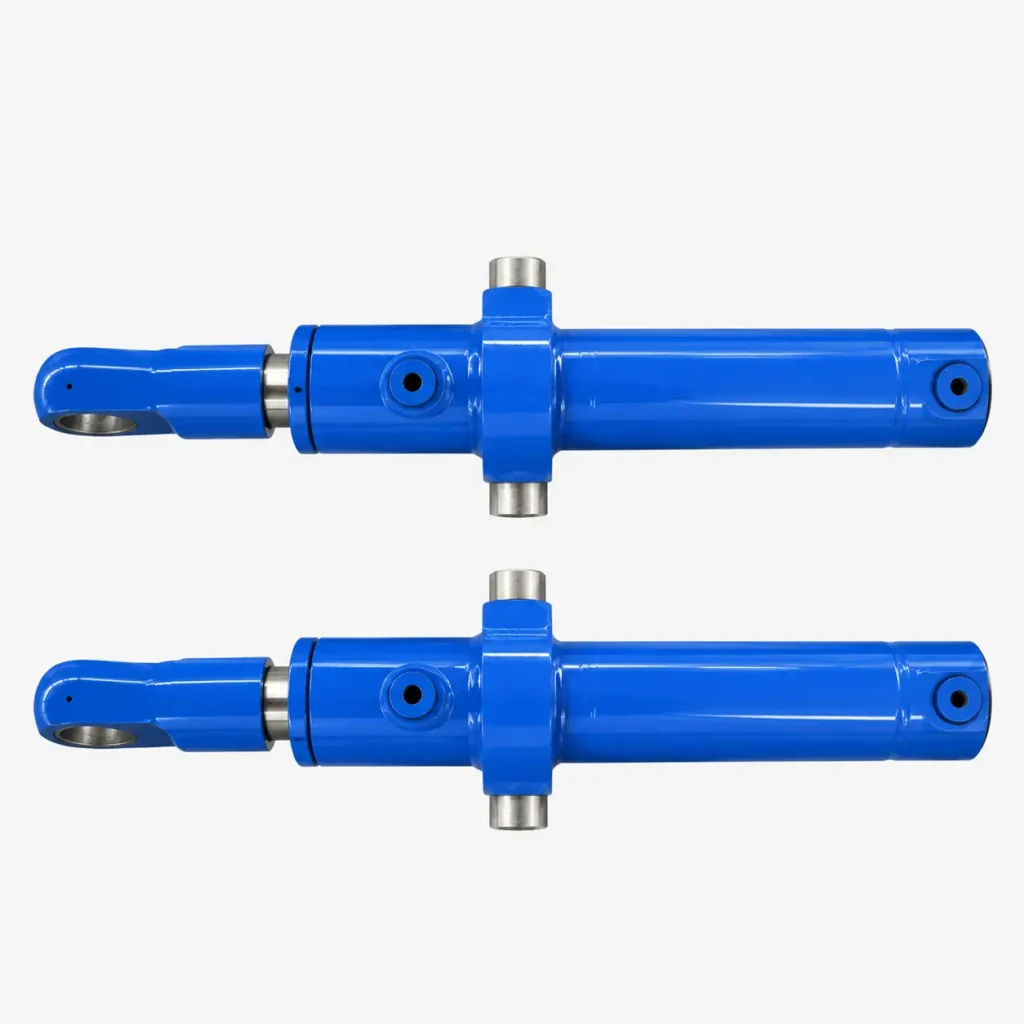
Weld-on types generally offer greater flexibility in arranging mounting lugs, ports and valve blocks to suit equipment requirements; tie-rod types come in a wide range of standard mounting configurations and can also be customised. Weld-on types should be prioritised for special mounting points and compact piping layouts, whilst equipment with existing standard mounting interfaces should first be checked against tie-rod products. When customising, the direction of the oil ports, fitting specifications and mounting dimensions should be specified on the drawings. The mounting method must also accommodate the movement of the mechanism to avoid generating lateral loads, i.e. transverse forces deviating from the piston rod axis. Otherwise, both types of construction may experience accelerated wear of guide components and seals. Do not weld brackets onto finished cylinder barrels without prior confirmation from the manufacturer.
4. Corrosion and Environmental Exposure
Welded designs have fewer external clearances and are generally easier to clean of silt and sand; tie-rod designs require more thorough cleaning of the clearances between the tie rods, end caps and cylinder barrel. However, corrosion resistance depends primarily on the materials, coatings, piston rod surface treatment and seal protection, rather than the connection structure. If the equipment is exposed to salt spray, de-icing salt or cleaning fluids, the supplier should be informed of the medium and exposure conditions, and a corresponding corrosion protection scheme should be requested. Pay particular attention to the piston rod surface, as corrosion pitting may damage seals and cause oil leaks; simultaneously, check the protection around the tie-rod threads and welds. The number of hours in a salt spray test cannot be directly converted into the service life under field conditions.
5. Standardisation and Interchangeability
There are many industrial products of the tie-rod type that utilise standard mounting dimensions, making it generally easier to find replacement models; customised welded types often require item-by-item verification against drawings. Even if mounting dimensions comply with the same standard, this does not imply that performance and internal components are interchangeable. For example, ISO 6020-2:2015 primarily specifies the mounting dimensions for corresponding series of hydraulic cylinders.
Before replacement, verify the cylinder bore, rod diameter, stroke, retracted mounting distance, mounting holes, rod end connections and hydraulic ports, and then confirm the operating pressure, seal materials and end-of-stroke cushioning (the function that slows down the cylinder as it approaches the end of its stroke). Even if a cylinder fits, a different rod diameter may alter the pulling force and speed during retraction, and seal kits should never be assumed to be interchangeable between brands.
6. Initial Cost and Lifecycle Cost
There is no fixed hierarchy regarding purchase prices. Standard off-the-shelf tie-rod types may be more economical, whilst mass-produced welded types may also offer a price advantage. When comparing quotations, standardise requirements for pressure, dimensions, materials, corrosion protection and accessories to avoid mistaking configuration differences for structural price variations. Total lifecycle costs include procurement, installation, maintenance, repairs and downtime losses. Tie-rod types are easy to disassemble and reassemble, but maintenance costs also depend on the availability of spare parts and operational space; welded types with removable guide assemblies can also have their seals replaced.
Which Design Handles Pressure, Shock, and Side Load Better?
Both designs can be used in high-pressure applications, though their impact resistance depends on the specific design; withstanding lateral loads cannot be addressed solely by choosing between a welded or tie-rod design. You need to examine the pressure-bearing connections, the ability to withstand repeated loading, and whether the equipment provides reliable guidance for the load.
Weld and Barrel Load Paths
The load path refers to the route along which forces are transmitted through the components. The hydraulic pressure inside a welded cylinder not only expands the cylinder barrel outwards but also pushes the end caps apart. The welds connecting the cylinder base must transfer the end loads into the cylinder barrel, which are then transferred to the equipment via the corresponding mounting structure.
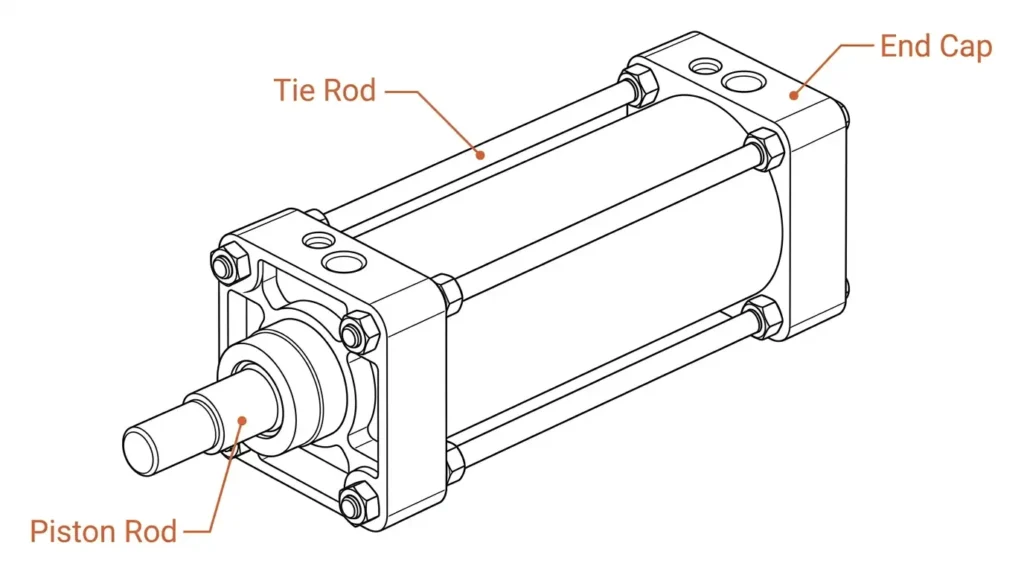
If a threaded or bolted guide assembly is used at one end of the piston rod, this connection must also bear the load independently; it is not sufficient to inspect only the cylinder base welds.
Welded constructions eliminate the need for external tie rods and their clamping connections, but this does not automatically eliminate the risk of impact. During repeated pressure cycles, the weld geometry, manufacturing quality and transition areas of the cylinder barrel all affect fatigue life, i.e. the service life before failure occurs under repeated loading.
Tie-Rod Preload and Stretch
Tie-rod designs rely on external tie-rods to clamp the end caps to the cylinder barrel. The preload generated by tightening the nuts is the clamping force established before the cylinder begins operation; the tie-rods therefore undergo a slight elastic elongation, which is a normal state of stress and does not indicate damage. During operation, the end-cap separation force generated by hydraulic pressure alters the tension in the tie-rods and the clamping state of the mating surfaces.
If preload is insufficient, the nut is loose, or the load exceeds the design range, the mating surfaces may lose sufficient clamping force, increasing the risk of leakage and fatigue damage. However, tie-rods should not be tightened excessively, as over-tightening may also damage the threads or components. During maintenance, assembly must be carried out in accordance with the torque, tightening sequence and lubrication conditions specified for this model; values from other cylinders must not be applied, nor should tightening be carried out whilst the cylinder is under pressure.
Why External Guidance Still Matters
Lateral loads are transverse forces acting off-axis to the piston rod. These cause the piston rod to bend and subject internal guide components and seals to localised stress. Even though a welded cylinder body may be very robust, this does not mean the piston rod can withstand significant lateral forces; the same applies to tie-rod-type cylinders. Unless the manufacturer explicitly specifies a permissible lateral load, do not use a standard hydraulic cylinder as a guide for the load.
For example, when using a hydraulic cylinder to push a heavy platform horizontally, the platform’s weight and deflection torque should be borne by guide rails or rollers, whilst the cylinder is primarily responsible for the pushing and pulling action. You must check the alignment throughout the entire stroke, particularly when the piston rod is fully extended. For long-stroke compression applications, you must also verify the risk of buckling, i.e. the risk of a slender piston rod buckling under compression; a thickened cylinder barrel cannot replace external guidance or rod diameter verification.
Manufacturer Ratings Over General Rules
Ultimately, selection should be based on the specific model’s ratings and operating conditions. For example, the Parker 2H tie-rod series is recommended for heavy-duty hydraulic applications up to 210 bar (21 MPa), but the manufacturer also requires that limitations arising from mounting configuration, stroke and fatigue stress be taken into account. This illustrates that the statement ‘tie-rod cylinders are unsuitable for high pressure’ is too general, and also demonstrates that rated pressure cannot be considered in isolation from the installation conditions.
Which Cylinder Is Easier to Maintain and Repair?
Tie-rod types are generally easier to dismantle completely; however, when replacing seals, detachable welded cylinders can also be easily serviced. The factors that truly affect the difficulty of maintenance are the access points for dismantling and repair, the location of the damage, the tools required, and the availability of spare parts.
Tie-Rod Disassembly and Field Service
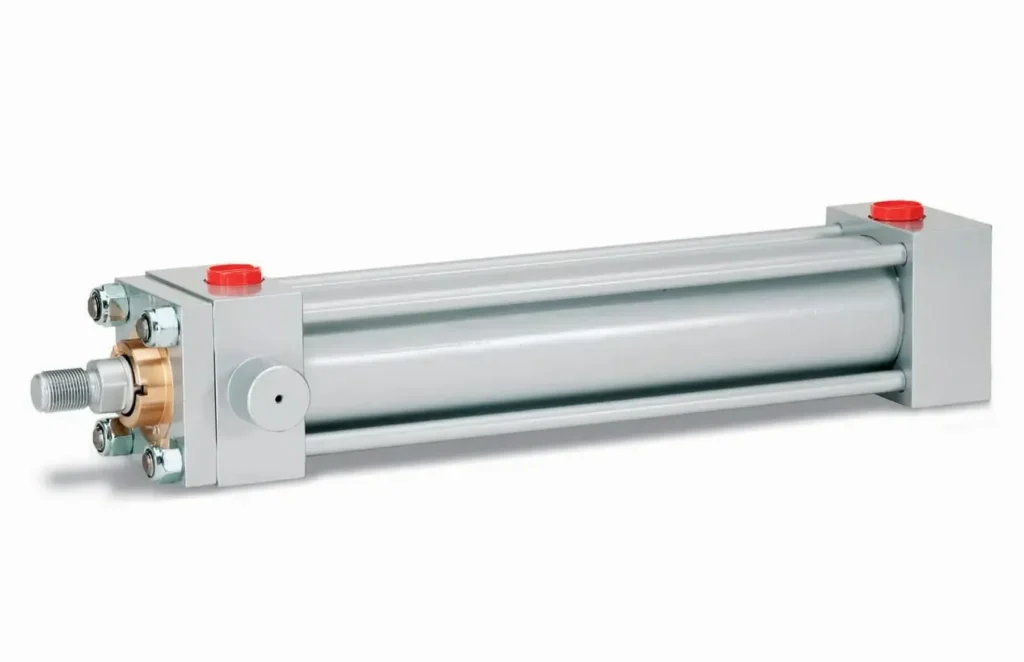
In tie-rod types, the end caps are clamped by external tie-rods; once the connection is released, the end caps, cylinder barrel and internal components can be inspected separately, which generally makes it easier to replace damaged parts. However, if oil is leaking only at the piston rod, it is not necessarily required to dismantle the entire cylinder. For example, on certain Parker models, the guide seal assembly can be removed independently without loosening the tie-rod.
Field replacement of seals requires a clean working area, suitable tools and the manufacturer’s maintenance instructions. Before disassembly, the load must be securely supported, the power source isolated and residual pressure released; during reassembly, tighten according to the torque specifications, sequence and lubrication conditions specified for that model. ‘Easy to dismantle’ does not mean it can be reassembled by feel alone; improper clamping may result in leakage at the end cap joints.
Gland Access in a Welded Cylinder
The gland is the guide and seal assembly at the piston rod outlet, responsible for supporting the piston rod and housing the seals. Many welded cylinders are welded only at the cylinder base, whilst the rod-end assembly remains secured by threads, bolts or retaining rings; these can be removed to extract the piston rod and piston. Before carrying out maintenance, consult the sectional drawing to confirm the fixing method and locking components; do not simply use pipe wrenches to forcefully twist the assembly just because a circular end is visible. For removable structures, replacing seals usually does not require cutting the weld; for sealed or non-serviceable designs, follow the manufacturer’s instructions.
Barrel Damage, Honing, and Weld Inspection
Scratches on the inner wall of the cylinder barrel are not necessarily resolved simply by replacing the seals. Minor damage can sometimes be addressed through honing—a precision machining process that involves the removal of a small amount of material from the inner wall to refine the bore diameter and surface finish; however, the bore must still meet the specified requirements for diameter, shape and surface finish after machining. Deep grooves, severe rust or cylinder barrel deformation cannot be resolved simply by ‘honing a little more’; doing so may result in excessive clearance or insufficient wall thickness. The decision on whether to repair should be made by the maintenance workshop following measurement.
Cylinder barrels of the tie-rod type can usually be replaced as individual components; for welded types, if the damage involves the connection between the cylinder barrel and the cylinder base, further machining and welding assessment are often required. Where there are signs of cracking near welds or confirmed oil leaks, the cause of the damage should be assessed by a specialist, and non-destructive testing—i.e. defect inspection without damaging the component—should be carried out as required.**
Availability of Spare Parts and Seal Kits
Standardised rod-type products generally have more readily available spare parts; however, universal installation dimensions do not imply that internal components are interchangeable. Welded types with a comprehensive parts system may also be repaired more quickly than discontinued rod-type models. Seal kits must be matched to the specific model, manufacturing version and service medium; they must not be selected based solely on cylinder bore, rod diameter or the appearance of old seals. Before purchasing, verify at least four items: the seal kit part number, lead times for key components, disassembly and repair instructions, and requirements for specialised tools. For equipment where downtime costs are high, commonly used seal kits may be kept in stock in accordance with the manufacturer’s storage requirements.
When Should You Choose a Tie Rod Cylinder?
When equipment can utilise standard mounting dimensions, allows for maintenance access, and you prioritise the availability of spare parts and rapid replacement, tie-rod cylinders are worth considering as a priority. **However, to determine suitability, it is still necessary to check the pressure, operating frequency, environment and load guidance; it is not sufficient to simply consider whether the equipment is located in a factory.
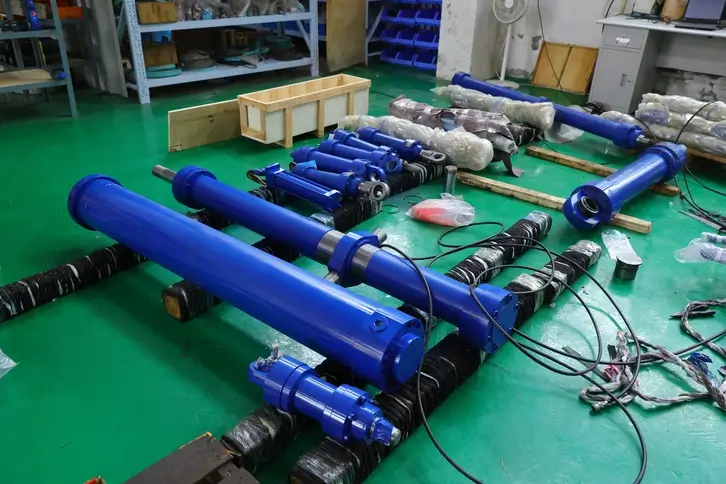
Standard Industrial Machinery
If you are designing an assembly machine, workholding fixture or a material-feeding mechanism for a production line, tie-rod cylinders are usually a convenient starting point. Established product ranges offer a variety of bore sizes, strokes and mounting configurations, which can minimise the need for customised designs. When selecting a model, first filter standard models based on the required thrust or pull force, operating pressure, stroke and installation space, then have the supplier verify the operating frequency and impact conditions. If the frame is particularly narrow, the mounting points are unusual, or standard end caps and external tie rods hinder the layout, there is no need to force the use of a tie-rod type simply to utilise standard components.
Clean, Controlled Environments
Indoor environments with low dust levels, stable temperatures and ease of cleaning are conducive to the maintenance of rod-type hydraulic cylinders. The gaps between the external rods, nuts and end caps minimise the accumulation of dirt and corrosive media, helping to maintain the integrity of external connections whilst facilitating future disassembly and reassembly. However, a clean external environment does not guarantee that the hydraulic fluid inside is clean; fluid contamination may still damage seals and sliding surfaces.
If the equipment is exposed to grinding dust, welding spatter, salt spray or frequent rinsing, standard configurations cannot be applied directly. You should inform the supplier of the contaminants, temperatures and cleaning media to confirm whether the piston rod protection, coatings and dust seals—sealing components that scrape away contaminants from the rod surface—are suitable. Rod-type cylinders are not unsuitable for these environments, but they require appropriate protection and cleaning conditions.
NFPA Interchangeability and Frequent Service
If a factory wishes to standardise spare parts and minimise rack modifications during replacement, priority should be given to models that explicitly comply with relevant NFPA mounting dimension standards; here, NFPA refers to the National Fluid Power Association. Such standards facilitate the interchangeability of products from different brands, but do not guarantee that all rod-type cylinders comply with the standards, nor do they guarantee the interchangeability of internal components.
For equipment requiring regular maintenance, the removable end caps and split components of rod-type cylinders generally facilitate inspection and replacement. Prior to procurement, verify that the installation dimensions, pressure ratings and functions are compatible, and request the seal part numbers, assembly and disassembly instructions, and spare parts lead times. If a cylinder leaks frequently, first check for contamination, off-centre loading or pressure surges.
Presses, Clamps and Material Handling
Rod-type cylinders can be used for press-fitting, clamping and material handling, but the key selection criteria differ for these three applications. For press-fitting, it is necessary to verify the pressing force, frame rigidity and the piston rod’s resistance to bending; for clamping, the clamping force and pressure holding requirements must be confirmed, as the cylinder itself must not be regarded as a reliable locking device; for material handling mechanisms, attention should be paid to movement speed, stopping impact and load holding.
For example, when using a hydraulic cylinder to push a heavy-duty slide horizontally, the guide rails should bear the weight of the slide and any deflection forces, whilst the cylinder is primarily responsible for pushing and pulling along the axis of the rod. If the load is suspended from the extended piston rod, this will generate lateral loads, i.e. forces that bend the piston rod sideways, accelerating wear on the guide components and seals.
When Should You Choose a Welded Cylinder?
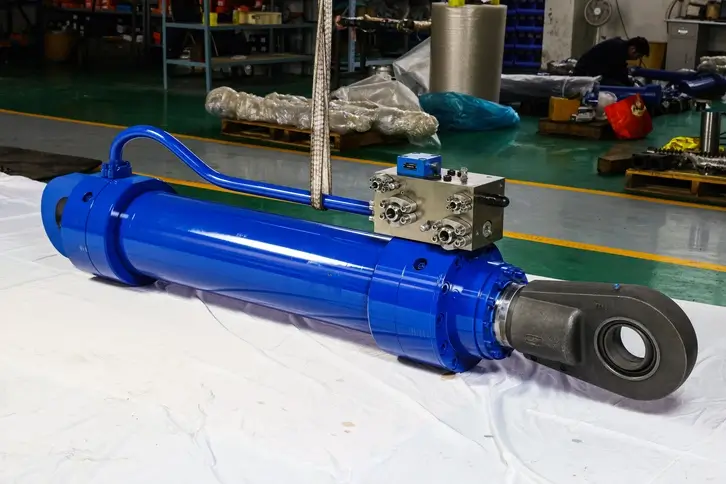
Where installation space is limited, customised interfaces are required, or the equipment is used in mobile machinery subject to significant vibration, welded cylinders should be given priority consideration. They eliminate the need for external tie rods, facilitating a compact design.
Mobile and Off-Highway Equipment
Welded cylinders are commonly used in mobile and off-highway equipment such as loaders, excavators and agricultural machinery. The cylinders in these machines need to swing in tandem with the machinery; space is often limited, and the installation locations are frequently unsuitable for standard industrial cylinders. Weld-on cylinders facilitate the configuration of mounting ears, pin connections and port locations, allowing the cylinder to adapt to the overall machine layout. For example, when selecting a cylinder for a loader’s linkage mechanism, you should provide the dimensions of the pins at both ends, the closed-in mounting distance, the stroke and the swing range, so that the supplier can verify the entire motion sequence. Do not select a welded-in type solely on the basis that it is ‘for construction machinery’; if an existing standard hydraulic cylinder already meets the load, space and maintenance requirements, the product designation itself is not a valid reason for replacement.
Compact Installation Spaces
When a hydraulic cylinder needs to be mounted within a narrow frame or close to moving parts, a welded-in type is usually easier to position. The absence of external tie rods and nuts reduces the external protrusion, but this does not mean that all welded-in types are shorter or lighter. When selecting a model, check the installation envelope—that is, the total space occupied by the cylinder, fittings and hoses during operation. Even if the cylinder barrel fits, the cylinder will still be unsuitable if the port fittings come into contact with the frame.
High-Shock or Harsh Outdoor Duty
In applications characterised by significant vibration and fluctuating pressures, a welded cylinder designed for such conditions may be the appropriate choice. Welding the cylinder base eliminates the need for tie-rod clamping connections and face seals at that point; however, the welds and the connection between the cylinder barrel and the rod end must still withstand cyclic loads. ‘Welded’ is not a shock-resistant rating, and it cannot be assumed that a welded cylinder is necessarily more reliable than a tie-rod type designed for the rated conditions.
You should provide the supplier with the normal pressure, peak pressure (i.e. the high pressure that occurs briefly during directional changes or impacts), operating frequency and load speed. If the shock results from high-speed impact at the end of the stroke, you must also consider buffering or system deceleration. For outdoor use, you must additionally confirm the corrosion protection of the piston rod, external coating and seal protection; if the cylinder will be exposed to salt spray, mud, sand or low temperatures, you should inform the manufacturer explicitly.
Custom Mounts and Port Locations
If the mounting points or port orientations of standard cylinders are unsuitable for the equipment, welded-on cylinders are generally more adaptable to the specific requirements of the machine as a whole. You can adjust the design of the mounting brackets, the orientation of the ports, or configure valve block interfaces to route the piping away from tyres, connecting rods and areas prone to impact. For example, orienting the ports towards the inside of the frame may help protect the hoses, but sufficient space must still be allowed for tightening and replacing the couplings. Customisation requirements should be specified on the drawings, clearly indicating the reference plane for port orientation, thread specifications, pin hole dimensions and clearance requirements. The mounting arrangement must also allow the mechanism to swing freely, whilst avoiding the generation of lateral loads, i.e. forces that cause the piston rod to bend sideways.
What Should Procurement Compare Beyond Construction Type?
When procuring, suppliers should be asked to quote based on the same operating conditions, dimensions and acceptance criteria. ‘Welded’ or ‘rod-type’ are merely structural classifications; what truly determines whether a hydraulic cylinder is suitable and worth purchasing are the specific conditions outlined below.
Working and Proof Pressure
Working pressure is the pressure at which the hydraulic cylinder is permitted to operate under specified conditions; proof pressure is the test pressure used to verify the integrity of the pressure-bearing components. Passing a short-term test at a higher pressure does not imply that the hydraulic cylinder can operate continuously at that pressure, nor does it prove that it can withstand repeated shocks of the same magnitude.
When requesting quotations, normal pressure and peak pressure should be specified separately, and suppliers should be required to state the permissible working pressure, test pressure, pressure holding time, test items and acceptance criteria. Do not simply accept the statement that ‘pressure testing has been carried out’, nor should you assume that all products are tested at the same test multiplier. If acceptance is to be based on ISO 10100, the version and specific requirements should be clearly stated in the procurement documents; this standard covers the acceptance and functional testing of hydraulic cylinders.
Bore, Rod, Stroke, and Column Load
The bore refers to the inner diameter of the cylinder barrel, the rod diameter refers to the diameter of the piston rod, and the stroke refers to the distance of extension and retraction. The bore primarily affects thrust, whilst the rod diameter affects retraction pull and load-bearing stability; under the same oil flow rate, changes in dimensions will also alter speed. Therefore, one must not simply compare products based on ‘identical rated thrust’.
It is also necessary to verify the column load, i.e. the axial load-bearing capacity of the piston rod when acting as a slender compression member. The longer the piston rod extends, the greater the need to prevent buckling—instability and bending under compression. Suppliers must be required to verify the cylinder’s suitability based on the maximum extension length, mounting method and actual thrust, rather than simply demonstrating adequacy using the formula ‘pressure × piston area’. For example, short-stroke and long-stroke cylinders with the same bore diameter may have the same theoretical thrust, but their permissible compressive loads may not necessarily be the same.
Mounting Geometry and Allowable Side Load
Mounting dimensions must be verified to check the clamping distance, pin diameter, mounting lug width, flange hole spacing, rod end connections and port orientation; it is also necessary to check whether the cylinder will come into contact with the frame throughout its full stroke. The fact that the dimensions allow for installation does not mean that the load distribution is correct.
A lateral load is a transverse force acting off-axis to the piston rod, which may cause rod bending and uneven seal wear. If the mechanism is subject to eccentric loads, the direction of the force, the point of application and the external guidance method must be specified, and the manufacturer must be asked to confirm the permissible range. Where the manufacturer has not specified a permissible lateral load, one should not assume that the cylinder can also function as a guide rail; the weight and deflection forces of heavy-duty slide tables should primarily be borne by the guide rails.
Seal System, Fluid, and Temperature Range
Do not simply compare seal brands. The seal system comprises interdependent components such as piston seals, piston rod seals and dust seals; material selection must be compatible with the hydraulic fluid, temperature, pressure and movement speed. A configuration suitable for mineral hydraulic oil may not necessarily be suitable for other media such as water-glycol; nor are high-temperature-resistant materials necessarily suitable for low-temperature start-up.
You should provide the brand and model of the hydraulic fluid, the minimum start-up temperature, normal oil temperature, maximum oil temperature and operating speed, and request the supplier to confirm compatibility in writing. The temperature range must correspond to the actual configuration of the entire cylinder and cannot simply be derived from the limit values of a particular sealing material. For applications requiring prolonged pressure maintenance, internal leakage requirements must also be agreed upon, i.e. the permissible extent to which fluid leaks from one side of the piston to the other.
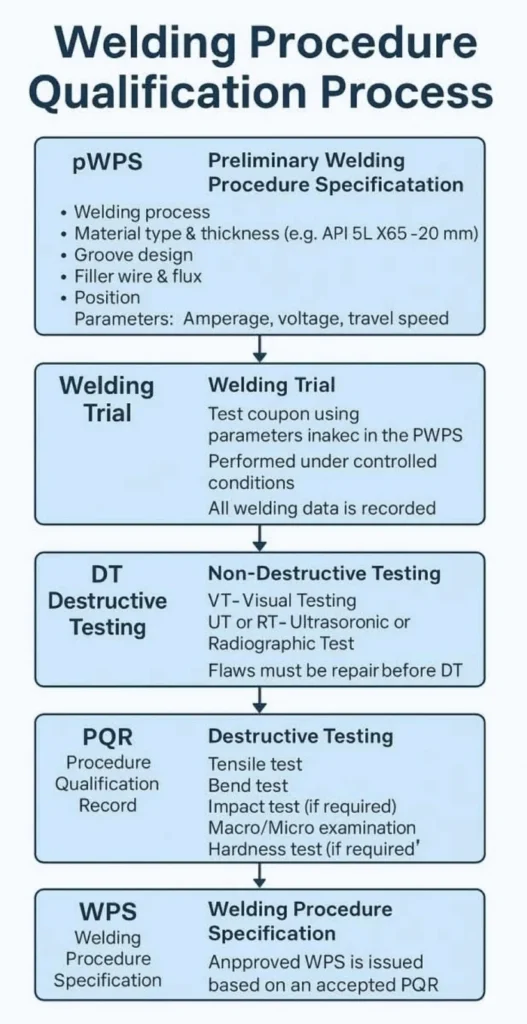
Welding Procedure, Inspection and Traceability
For hydraulic cylinders featuring load-bearing welds, it is essential to verify that the supplier utilises an appropriate WPS (Welding Procedure Specification, i.e. an operational document specifying materials, welding methods and key parameters), as well as the process qualification and personnel certification required for the project. A neat weld appearance or the use of robotic welding alone does not guarantee the quality of the joint.
Inspection requirements should be commensurate with the type of weld and the operational risks involved, clearly specifying visual inspections, necessary non-destructive testing (NDT) – defect inspection without damaging the component – and acceptance criteria; it is not necessary to apply the same type of testing uniformly to all welds. The procurement documentation should also specify the scope of traceability, ensuring that the hydraulic cylinder’s serial number can be linked to the relevant material, manufacturing and factory test records. For tie-rod types, attention should also be paid to the tie-rod material, critical threads and assembly controls.
Warranty, Repair Network and Spare Parts Support
A long warranty period does not necessarily mean lower total costs in the event of a fault. You need to confirm the start date of the warranty, its scope of coverage, any exclusions, and who is responsible for the costs of dismantling, transport and labour for repairs. You should also clarify in advance whether on-site repairs affect the warranty and whether faulty parts must be returned. At the same time, request the part numbers for the seal kits, repair instructions, lead times for key components and the actual service locations. You may ask the supplier to provide separate quotations for the complete cylinder, seal kits, piston rod assemblies and replaceable guide assemblies, and confirm their corresponding models and versions to avoid discovering that spare parts are difficult to obtain only after purchasing the hydraulic cylinder.
Welded vs. Tie Rod Selection Checklist
First, confirm the operating conditions and installation requirements before selecting the design. Weld-on types are generally suitable for compact layouts and specialised interfaces, whilst tie-rod types are generally suitable for standard industrial installations and easy disassembly and maintenance; ultimately, the performance, dimensions and after-sales terms of the specific model should be taken as the final guide.
a. Choose by Application Load and Environment
First, provide the supplier with the required thrust and pull force, normal pressure, peak pressure (brief spikes in pressure occurring during directional changes or impacts), movement speed and cycles per minute. For long-stroke thrust and pull applications, also verify whether the piston rod is susceptible to buckling; where lateral forces are present, check for external guidance – selecting a welded type should not be relied upon to resolve off-centre loading.
For mobile equipment, applications involving significant amounts of silt and sand, or scenarios requiring a compact profile, welded-type cylinders should be prioritised; for standard production equipment and environments with good maintenance conditions, rod-type cylinders should be prioritised. However, high pressure does not automatically necessitate the selection of a welded-type cylinder, nor does outdoor use automatically imply that a welded-type cylinder offers greater corrosion resistance. For both types of construction, it is essential to confirm that the seals, piston rod surface treatment and coatings are suitable for the hydraulic fluid, temperature and corrosive media.
b. Confirm Space, Mounting, and Service Access
Request dimensional drawings from the supplier and verify the retracted installation clearance, stroke, pin hole or flange dimensions, rod end connections and port orientations. Check the fully retracted, fully extended and intermediate positions to ensure that the cylinder, fittings and hoses do not come into contact with the frame. The mounting configuration must also accommodate the mechanism’s pushing, pulling and swinging movements; simply checking whether the hole positions align is insufficient.
Include maintenance clearance in the installation drawings. Weld-on types may be easier to fit into confined spaces, but sufficient space must still be provided to remove the guide seal assembly and extract the piston rod; for tie-rod types, allowance must be made for the removal and installation of nuts, tools and end caps. For example, whilst a cylinder may be installable, if the entire mechanism must be dismantled to replace seals, maintenance costs may increase significantly.
c. Compare Standard vs. Custom Requirements
First check whether standard models can meet the requirements before deciding whether to opt for a customised solution. When using standard mounting interfaces or wishing to facilitate the sourcing of replacement products, standard rod-type cylinders should be prioritised for comparison; when special mounting lugs, port locations or a compact profile are required, welded-type solutions should be prioritised. However, as both configurations are available in standard and customised forms, one must not equate ‘rod-type’ with standard components or ‘welded-type’ with non-standard components.
Prior to procurement, ask the supplier to specify, item by item, which requirements are met by the standard configuration and which require modification, and confirm the revised drawings, price, delivery time and spare part part numbers. Even if two models have identical installation dimensions, continue to verify the working pressure, rod diameter, seals and cushioning functions to avoid a situation where ‘it fits, but the performance does not match’.
d. Evaluate Downtime and Total Cost of Ownership
The total cost of ownership comprises the sum of procurement, installation, maintenance, repair and downtime losses. Comparisons should be based on the same service life and operating conditions; one should not merely compare quotations for the cylinder as a whole. The advantage of rod-type cylinders in terms of ease of disassembly requires the availability of spare parts and suitable repair facilities; conversely, serviceable welded-type cylinders may be restored more quickly if spare parts are readily available. When requesting quotations, obtain prices for both the complete cylinder and the seal kit, as well as lead times for key components, maintenance instructions and the scope of the warranty. For equipment where downtime costs are high, further confirm local repair capabilities and contingency plans for replacement cylinders.
Frequently Asked Questions About Welded and Tie Rod Cylinders
Can a Welded Hydraulic Cylinder Be Rebuilt?
Many can be, provided they have a removable guide and seal assembly. This assembly is located at the piston rod outlet and is responsible for supporting the piston rod and housing the seals. Many welded hydraulic cylinders are welded only at the cylinder base, whilst the rod end is secured by threads or retaining rings, allowing the assembly to be disassembled to replace seals and inspect internal components. Before carrying out repairs, consult the parts drawing and the seal kit part number; do not simply cut through the weld. If the cylinder barrel is severely deformed or the weld has cracked, a professional assessment is required, as the issue cannot be resolved simply by replacing the seals.
Are Tie-Rod Cylinders Limited to Low Pressure?
No. For example, Prince offers tie-rod cylinders with a continuous working pressure rating of 3,000 psi (approximately 20.7 MPa). However, this figure applies only to the specific model in question and cannot be generalised to all tie-rod cylinders. When selecting a model, you should provide the normal operating pressure, the instantaneous pressure peak during impact, and the operating frequency to allow the manufacturer to confirm suitability; do not treat the factory pressure test rating as the long-term working pressure.
Are Welded Cylinders Always Stronger?
Not necessarily; you must first clarify whether you are comparing pressure-bearing capacity, impact resistance or bending resistance. **Welded cylinders do not require external tie rods, but their performance still depends on the material, dimensions, weld quality and installation method; tie-rod cylinders, on the other hand, require a reliable tie-rod design and secure clamping during assembly. In particular, do not equate a robust cylinder body with the ability to withstand lateral loads—that is, forces that bend the piston rod sideways. If the load is eccentric or involves lateral forces, guide rails or other supports should be fitted first, before verifying the cylinder’s permissible load.
Do Tie-Rod Cylinders Conform to NFPA Dimensions?
Some industrial tie-rod cylinders comply with these standards, but not all. NFPA refers here to the National Fluid Power Association; the relevant dimensional standards facilitate installation interchangeability. When procuring replacement cylinders, verify the standards declared by the manufacturer and check the mounting hole spacing, retracted length, rod end connections, stroke and port configurations; also ensure that pressure ratings and functionality are compatible. Do not assume that a cylinder is a direct replacement simply because it is labelled ‘NFPA type’, and certainly do not assume that seal kits and internal components are interchangeable between different brands.
Choosing a Trusted Hydraulic Cylinder Manufacturer
From standard hydraulic cylinders to custom solutions, we help you improve equipment performance, delivery reliability, and batch consistency
Explore Rivmate Cases

Hey There, I'm Melody!
We are a hydraulic cylinder manufacturer. For over 20 years, we have focused on producing reliable hydraulic cylinders. Need a hydraulic cylinder solution? Feel free to contact us.