Home / Top 10 Hydraulic Cylinder Manufacturers in China
Top 10 Hydraulic Cylinder Manufacturers in China
- Author: GY Hydraulic
- 20+ Years of Manufacturing
If you are looking for a Chinese hydraulic cylinder manufacturer, there is no one-size-fits-all ranking that applies to all projects. The requirements for manufacturers vary depending on whether the cylinders are for construction machinery, industrial equipment or custom applications. This article compiles a list of 10 Chinese hydraulic cylinder manufacturers worth comparing to help you draw up a shortlist for quotations; the order of the list does not represent an authoritative industry ranking.
When comparing manufacturers, first check whether they can supply suitable cylinders to meet your load, stroke, mounting dimensions and operating environment requirements, then verify the drawings, quality control, lead times and after-sales support. As a hydraulic cylinder manufacturer, GY Hydraulic also offers both standard products and bespoke services based on your drawings. We recommend that you send the same set of technical specifications to all shortlisted manufacturers to ensure that the quotations and proposals you receive are comparable.
Table of Contents
How We Evaluated Hydraulic Cylinder Manufacturers in China
The ‘Top 10’ on this list refers to candidate manufacturers worthy of further comparison; it does not represent an official top ten ranking based on sales, production volume or market share. We have focused our assessment on one key question: whether the manufacturer can supply hydraulic cylinders that are suitable for your equipment and for which documentation is available for verification. Manufacturers’ official websites and product catalogues can be used for an initial screening; however, delivery capacity, specific product quality and after-sales commitments must be verified when requesting quotations.
First, check whether the product is suitable. You need to inform the manufacturer of the load, operating pressure, stroke (the distance the piston rod needs to travel), mounting dimensions and operating environment, and then ascertain whether they have a corresponding product or the capability to customise one. For example, when a tipper lorry requires a long stroke but has limited space for retraction, you should focus on the manufacturer’s telescopic cylinder solutions; if you are replacing a cylinder in existing equipment directly, you should prioritise checking the mounting dimensions. Merely seeing the words ‘customisable’ is not sufficient to judge whether the manufacturer can successfully deliver on your project.
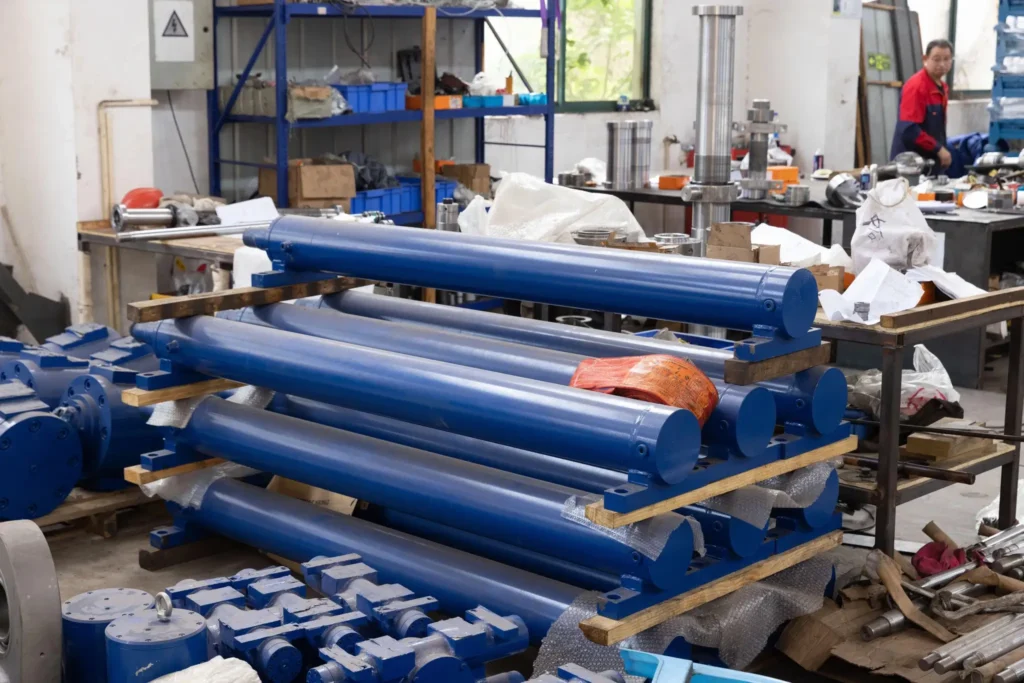
Next, examine what evidence the manufacturer can provide. You may request dimensional drawings for suitable models, rated working pressure, material and seal configurations, as well as factory inspection items. If the manufacturer presents an ISO 9001 certificate, you should also verify its validity period and scope of application. ISO 9001 certification relates to quality management systems; it does not mean that every hydraulic cylinder has received product certification.
Finally, compare delivery and after-sales support, including lead times for samples or mass production, the scope of the warranty, the supply of seals and the procedures for handling faults. The most practical approach is to send the same set of technical requirements to shortlisted manufacturers, asking them to specify compliance and any deviations item by item in their quotations. This will enable you to distinguish whether price differences stem from configuration, the scope of inspection, or the scope of services.
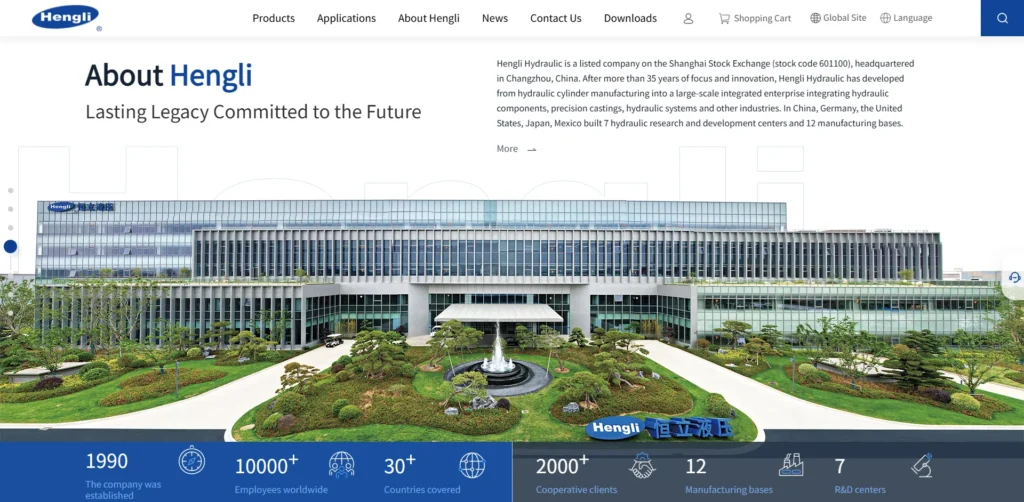
Headquartered in Changzhou, Jiangsu, Hengli Hydraulics manufactures products for sectors including construction machinery and industrial equipment. Its official website lists excavator boom cylinders, dipper arm cylinders and bucket cylinders, as well as hydraulic cylinders for aerial work platforms and cranes. If you are seeking original equipment manufacturer (OEM) or replacement cylinders for these machines, Hengli is well worth including on your list of suppliers to quote.
When selecting a model, first identify the product series most closely matching the intended use of your equipment, then verify the specific model number. For example, when replacing an excavator boom cylinder, you must provide at least the bore (inner diameter of the cylinder barrel), piston rod diameter, stroke (distance the piston rod travels), mounting dimensions at both ends, and the system operating pressure. Whilst Hengli’s website lists the parameter ranges for small excavator boom cylinders, the fact that suitable dimensions fall within these ranges does not guarantee that a particular model will fit your equipment directly; the positions of mounting pins and hydraulic ports, as well as load requirements, must still be verified on a case-by-case basis.
If you are purchasing a small quantity of non-standard hydraulic cylinders, you may also enquire whether Hengli can manufacture them to your drawings, whilst confirming the minimum order quantity, lead time and spare parts availability. A common mistake is to assume a product will be suitable based solely on the manufacturer’s size. What truly determines whether a purchase can be made are the drawings, model specifications and delivery plan provided by the manufacturer specifically for your operating conditions.
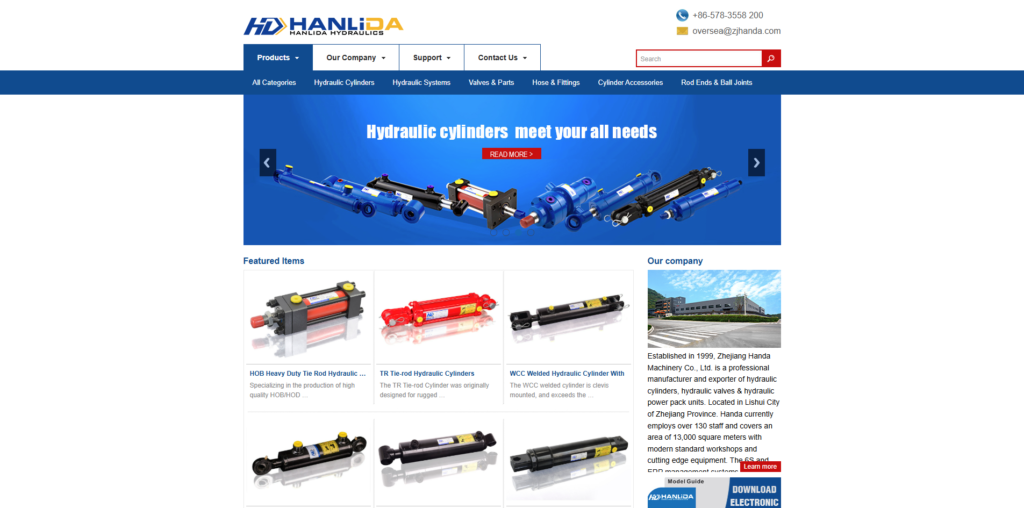
Zhejiang Handa Machinery Co., Ltd., based in Lishui, Zhejiang, supplies products such as hydraulic cylinders, hydraulic valves and hydraulic power units. A hydraulic power unit can be simply understood as an auxiliary device that supplies oil to hydraulic cylinders and provides power. If you are sourcing hydraulic products for agricultural machinery, automated equipment or lifting equipment, Handa is a manufacturer worth considering for further evaluation. The company is listed in the China Chamber of Commerce for Import and Export of Machinery and Electronic Products and the bauma CHINA exhibitor directory, where details of its business operations are provided.
Handa’s range of hydraulic cylinders includes rod-type and welded-type models, as well as single-acting and double-acting cylinders, with both standard series and bespoke customisation services available. ‘Rod-type’ and ‘welded-type’ refer to the cylinder’s structure, whilst ‘single-acting’ and ‘double-acting’ describe the drive mechanism; double-acting cylinders are hydraulically controlled to extend and retract. You may first ask the manufacturer to match your requirements from their existing range, before discussing customisation options regarding installation methods, port configurations, materials or performance specifications.
The compatibility between hydraulic cylinders and control components is a key aspect to consider when evaluating Handa. If your project requires hydraulic cylinders, valves and power units, you may enquire about a complete system configuration. For example, when requesting a quotation for a lifting system, you should specify the load, lifting speed, stroke and power supply requirements, and ask the manufacturer to clarify whether the quotation includes control valves, piping and testing.
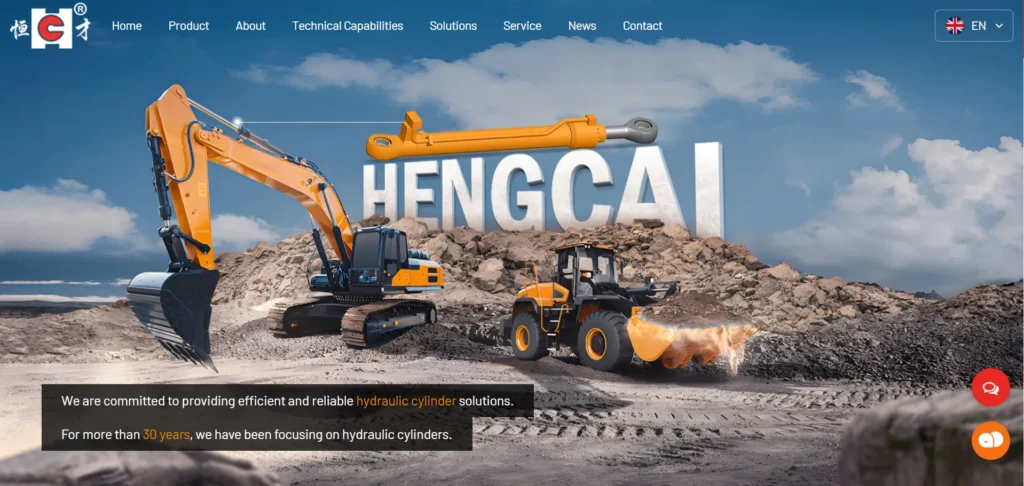
Jiangsu Hengcai Hydraulic Machinery Manufacturing Co., Ltd. is located in Jianhu County, Yancheng City, Jiangsu Province. According to its official website, the company’s history dates back to 1988, and it currently specialises in the research, development and manufacture of hydraulic cylinders. Its product range covers applications such as cranes, excavators, aerial work platforms, refuse compactors, marine machinery and vehicle tail lifts. If you are looking for hydraulic cylinders to fit these types of equipment, you can browse their product range by specific application.
Long-stroke, large-diameter and lightweight hydraulic cylinders are key technical areas worth considering when evaluating Hengcai. The company’s website details hydraulic cylinder solutions for large-diameter, long-stroke and thin-walled structures, as well as lightweight solutions for equipment such as cranes, fire engines and concrete pump trucks. Long stroke means the piston rod needs to extend and retract over a greater distance; lightweight design involves reducing the weight of the cylinder whilst meeting performance requirements. If your equipment is subject to constraints regarding installation space, dead weight and operating stroke, these areas warrant further discussion.
Hengcai also publicly showcases its marine hydraulic cylinder solutions. If your project involves a coastal or marine environment, you should specify whether the cylinders will be exposed to salt spray or seawater splashes, or whether they will be submerged, and request confirmation of the corresponding anti-corrosion treatments, sealing configurations and acceptance criteria.
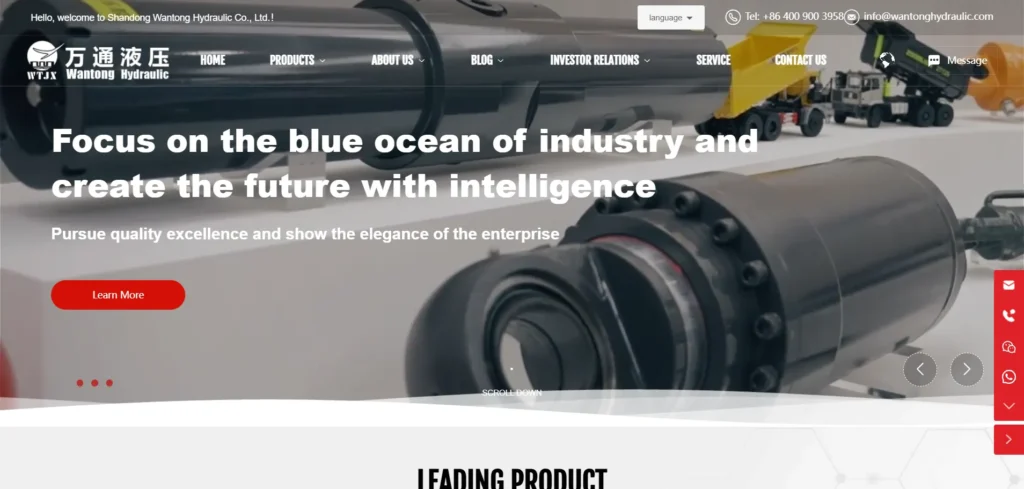
Shandong Wantong Hydraulic Co., Ltd. is located in Wulian County, Rizhao, Shandong. Its official website lists telescopic hydraulic cylinders for tipper lorries as one of its main products, whilst also showcasing cylinders for mining equipment, construction machinery and refuse collection vehicles. If you are sourcing a tipper lorry lifting system, Wantong is a manufacturer worth enquiring with; its product catalogue also features various front-mounted telescopic cylinders and mounting configurations.
Telescopic cylinders consist of several cylinder sections nested within one another, enabling a long stroke within a limited retracted space. Taking the replacement of a front lifting cylinder on a tipper lorry as an example, you should provide details of the load bed and rated load, the positions of the front and rear pivot points, the required lifting angle, the retracted length of the cylinder, the dimensions of the mounting pins, and the system operating pressure. Please ask the manufacturer to verify the force required for the entire lifting process, particularly under unfavourable mechanical angles during lifting, as well as the load-bearing capacity when the thinner cylinder sections are extended. Do not simply select the same model based on ‘similar vehicle tonnage’.
The specifications for the FC front-mounted telescopic cylinders published by Wantong can provide you with a preliminary understanding of the dimensions and pressure ranges for this series. When making an actual enquiry, you should still request dimensional drawings, stroke lengths and thrust at each stage, rated pressure and installation requirements for the corresponding model. A common mistake is to check only the total stroke whilst overlooking the retracted length and pivot point positions: even if the cylinder can be fitted, it may not be able to lift the load bed as intended.
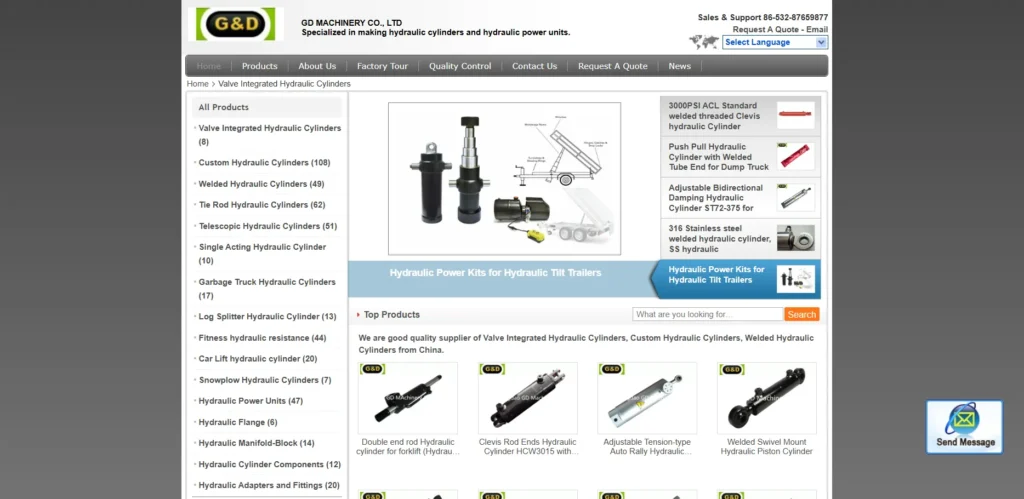
Qingdao GD Machinery states on its official website that it is engaged in the manufacture and trade of hydraulic cylinders and hydraulic power units. Its product catalogue includes welded, tie-rod and telescopic hydraulic cylinders, as well as hydraulic power units and connecting components. If you are looking for both hydraulic cylinders and oil supply equipment for a trailer lifting mechanism, you may wish to include this company in your list of suppliers to enquire with.
Taking a tipper trailer as an example, a hydraulic power unit is an oil supply system comprising a pump, motor, oil tank and other components. You can provide the manufacturer with details of the trailer’s load, the position of the lifting pivot, the available installation space and the power supply voltage, and ask them to confirm the cylinder’s thrust, stroke and retracted length, as well as the power unit’s pressure, flow rate and reservoir capacity. Whilst the GD website showcases hydraulic cylinders and power units for trailers, the fact that both products are available for sale does not mean that any combination will be directly compatible.
If you are purchasing replacement cylinders, you should also verify the pin dimensions, port locations and return mechanism. A common mistake is to focus solely on the total stroke of the telescopic cylinder whilst overlooking the force required to lift the trailer, as well as whether the cylinder will fit within the chassis when fully retracted. When requesting a quotation, ask the manufacturer to provide connection diagrams for the complete solution and the corresponding model specifications, and then confirm who manufactures each component and who is responsible for assembly and after-sales service.
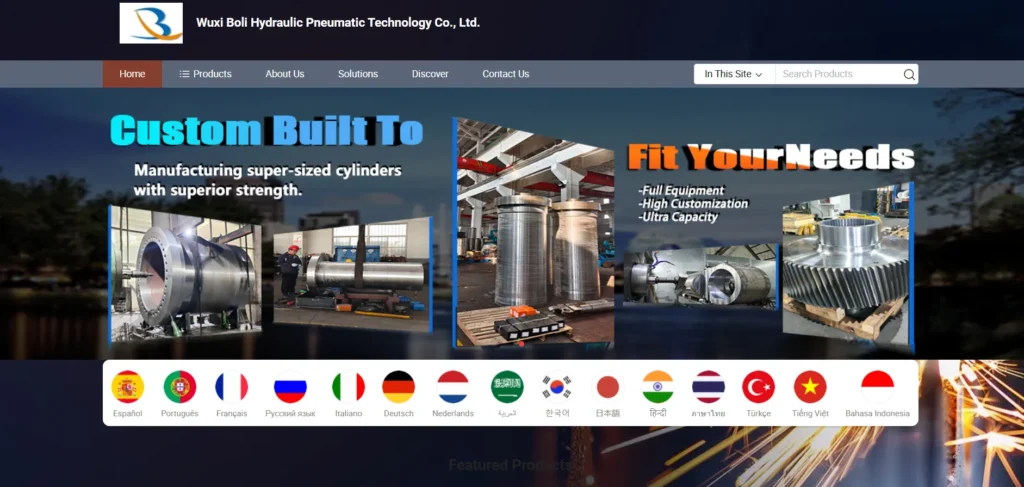
Wuxi Boli showcases telescopic and telescopic-type hydraulic cylinders, as well as cylinders for industrial equipment and port machinery, in its ChinaManufacturing company store; it also lists hydraulic power units and accessories. If you need to procure cylinders based on equipment drawings, you may add them to your enquiry list. The currently available product information is primarily sourced from the company store; the specifications of specific models must still be verified by obtaining official documentation from the manufacturer.
For example, if you wish to procure a hydraulic cylinder for a press, you should first provide the required thrust, system operating pressure, stroke (the distance the piston rod travels) and mounting dimensions, and then ask the manufacturer to confirm the bore diameter (inner diameter of the cylinder barrel) and piston rod diameter. Thrust is related to the area over which the hydraulic pressure acts; therefore, you cannot simply look at the ‘100 tonnes’ in the product title and assume that the cylinder will be able to deliver the required force under your equipment’s operating pressure.
Upon receiving a quotation, request that the manufacturer provide dimensional drawings, rated working pressure, mounting methods and inspection requirements for the specific model. If replacing an existing hydraulic cylinder, you must also verify the fully retracted length, pin hole or flange dimensions, and port locations. The product categories and general parameters listed on the platform are suitable for initial screening; the final order should be based on the model drawings and technical specifications confirmed by both parties.
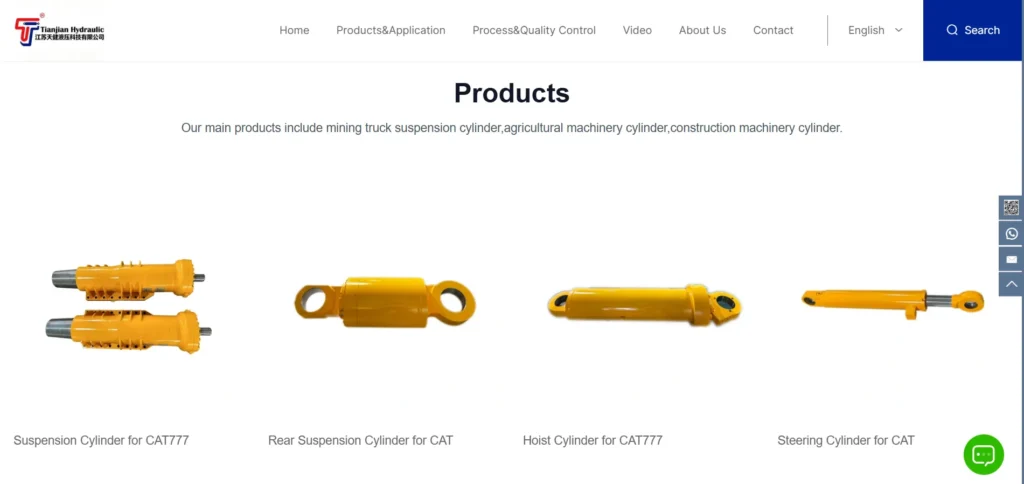
Jiangsu Tianjian Hydraulic Technology Co., Ltd., based in Jingjiang, Jiangsu, specialises in suspension cylinders, hydraulic cylinders for construction machinery and bespoke hydraulic cylinders. According to the product catalogue on its official website, suspension cylinders for mining trucks and excavator cylinders are product lines worthy of particular attention. If you are seeking a supplier of hydraulic cylinders for mining equipment or construction machinery, you may wish to begin your assessment with these product ranges.
Replacement cylinders for mining vehicles and construction machinery provide a clear starting point when evaluating Tianjian. The range includes products suitable for certain CAT, BELAZ and KOMATSU equipment, covering suspension, lifting and steering cylinders, as well as boom, stick and bucket cylinders for excavators. Whilst these compatibility descriptions can help you identify potential products, they do not constitute confirmation that the company is an original equipment manufacturer (OEM) or authorised supplier for the relevant brands.
If you are procuring replacement hydraulic cylinders, we recommend providing the equipment model, serial number, part number and mounting dimensions so that the manufacturer can confirm the compatibility scope in writing. For example, equipment within the same series may utilise different port configurations, mounting connections and sealing designs depending on the year of manufacture or configuration. For projects where no off-the-shelf replacement models are available, Tianjian also offers custom hydraulic cylinders for applications such as presses, filter presses and marine engineering. You may submit drawings and operating conditions to request a detailed explanation of the specific design, manufacturing and testing procedures, before determining whether they are suitable for your project.
Zhejiang Huachang Hydraulic Machinery Co., Ltd. was established in 1978 and specialises in the research, development, manufacture and sale of hydraulic cylinders. If you are looking for a supplier of hydraulic cylinders for forklift trucks, warehouse handling equipment or aerial work platforms, Huachang is a Chinese manufacturer worth exploring further. The products showcased on its official website also cover applications such as construction machinery, environmental sanitation equipment, agricultural machinery and forklift attachments.
Industrial vehicles and aerial work platforms are areas worth focusing on when evaluating Huachang. For example, its hydraulic cylinders for forklift attachments include clamping cylinders and fork-spacing cylinders, used respectively for securing loads and adjusting the spacing between forks. The company’s published product documentation also states that it can provide different mounting interfaces, surface treatments, and ancillary accessories such as hydraulic locks and valve blocks according to requirements. These options can help you match the cylinders to specific equipment, but each must be confirmed individually when requesting a quotation.
If you are preparing to request a quotation from Huachang, we recommend providing details of the equipment’s intended use, installation drawings, operating pressure and stroke—that is, the distance the piston rod needs to extend and retract. You should also specify the equipment’s daily operating frequency and operating environment, and ask the supplier to confirm the appropriate seal configuration, testing requirements and spare parts availability.
Yantai Future Automatic Equipment Co., Ltd., based in Yantai, Shandong, was established in 1973 and specialises in hydraulic cylinders, integrated hydraulic and electrical systems, and other products. If you are seeking a supplier of hydraulic cylinders for refuse collection vehicles, waste treatment equipment or agricultural machinery, this company is well worth adding to your shortlist. Its official website clearly lists products and integrated solutions for these sectors, making it easy for you to filter by equipment application.
Judging by the publicly available product range, its provision of hydraulic cylinders and system solutions tailored to specific equipment is a key area of interest. For example, its agricultural machinery products include hydraulic cylinders for reversible ploughs and round balers; its construction machinery products include hydraulic cylinders for compact excavators, truck-mounted cranes and aerial work platforms; whilst in the environmental sector, it offers hydraulic cylinders for hook-lift systems and waste incinerators. If your project also requires a control system, you may wish to explore their hydro-electric integration services, which combine hydraulic actuators with electrical controls to achieve the required equipment movements.
When evaluating this supplier, it is advisable to specify your requirements in terms of the specific movements required. For instance, when procuring hydraulic cylinders for a reversible plough, in addition to dimensions and stroke—that is, the distance the piston rod extends and retracts—you should also specify the requirements for the reversing action, position holding and control valves. The reversible plough solution described on their website involves specialised control valves and hydraulically operated check valves; therefore, you will need to confirm whether the quotation includes these components and whether they are compatible with your existing hydraulic system.
Hubei Jiaheng Technology Co., Ltd., located in Shiyan, Hubei, was established in 2001 and is a company specialising in the research, development and manufacture of hydraulic cylinders. The products listed on its official website include hydraulic cylinders for tipper lorries, truck-mounted cranes, refuse collection vehicles and cranes. If you are seeking a supplier for specialised vehicles or mobile machinery, Jiaheng may be a candidate worth considering for further evaluation.
Judging by its publicly available product range, the area of Jiaheng’s portfolio that warrants particular attention is hydraulic cylinders for vehicle lifting and construction machinery. For example, when procuring lifting cylinders for tipper lorries, you should provide the body dimensions, lifting load, mounting point locations, required stroke and system operating pressure, so that the supplier can verify the forces involved throughout the lifting process. Selecting a cylinder based solely on the vehicle’s load capacity in tonnes may overlook the impact of the installation angle on the lifting force.
If your project requires high-precision positioning, specialised hydraulic fluids or operation in highly corrosive environments, you should further verify the relevant products and configurations; you cannot assume that their vehicle hydraulic cylinder range is suitable for all operating conditions. When requesting a quotation, it is advisable to also obtain installation dimension drawings, testing and acceptance requirements for the applicable operating conditions, information on seal kits and after-sales terms. This documentation will assist you more effectively in determining suitability for procurement than vague performance claims alone.
How to Compare Technical and Manufacturing Capabilities
When comparing the technical and manufacturing capabilities of hydraulic cylinder manufacturers, you can focus on three key questions: whether they understand your operating conditions, whether they can consistently produce products that comply with the drawings, and whether they can provide the relevant inspection records. The most practical approach is to send the same set of technical requirements to different manufacturers and then compare their design specifications, production controls and testing protocols.
First, examine how the manufacturer assesses your requirements. In addition to bore diameter, rod diameter and stroke, you should also specify the actual load, operating pressure, movement speed, mounting method, type of hydraulic oil and temperature range. The bore diameter refers to the internal diameter of the cylinder barrel, the rod diameter refers to the diameter of the piston rod, and the stroke is the distance the piston rod extends and retracts. These parameters must be considered together to determine whether the hydraulic cylinder is suitable. For example, when a long-stroke cylinder is subjected to thrust, the manufacturer should assess the risk of piston rod buckling—that is, the possibility of unstable bending under compressive load. You may request that they explain the basis for their dimensional selection and provide confirmation drawings.
Next, check whether there are clear control methods in place for critical processes. We recommend that you request machining and inspection records for products similar to yours, focusing on how the machining of the cylinder bore, the surface treatment of the piston rod, the installation of seals and assembly cleanliness are managed. If purchasing welded cylinders, you should also enquire about the welding process, post-weld dimensional checks, and whether weld inspections are required in accordance with project specifications. When making comparisons, cross-reference the drawing specifications against the actual inspection results; for outsourced processes, confirm who is responsible for acceptance testing and how non-conforming items are handled.
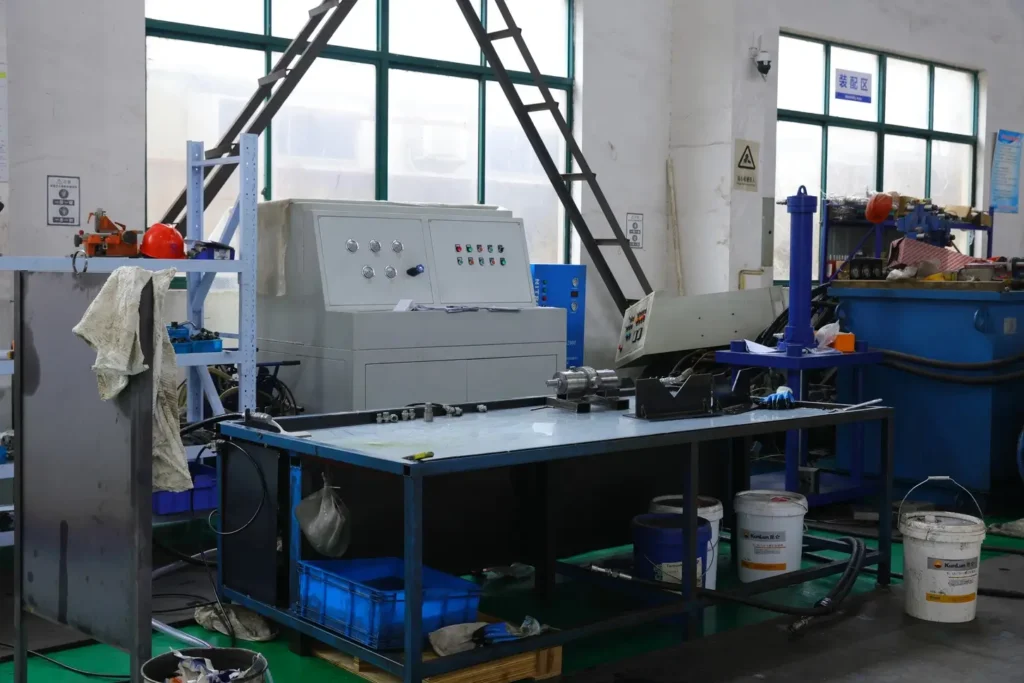
Materials and seal configurations must also be specified to verifiable standards. Terms such as ‘high-quality steel’ or ‘imported seals’ are insufficient to demonstrate that the product is suitable for your equipment. You may request that the manufacturer specify the material grades of key components, the brands and models of seals, as well as the applicable hydraulic fluids and temperature conditions. For example, outdoor equipment may be exposed to rain, dust or cleaning fluids; these conditions should also be taken into account when selecting seals. Seal materials must be suited to the operating environment; the brand alone is not a substitute for proper selection.
Testing capabilities should be assessed based on test conditions and reports. You should confirm which items are included in the factory inspection and which are carried out on a piece-by-piece basis, and require that reports record the product serial number, test pressure, pressure hold time, leakage test results and operational performance. ISO 10100:2020 is the relevant standard for the acceptance and functional testing of hydraulic cylinders and can serve as a reference for mutually agreed test requirements. For applications involving high-frequency reciprocating or impact loads, durability verification must be discussed separately; passing a single pressure test does not directly guarantee long-term service life.
Finally, confirm consistency between samples and mass production. You may request that the manufacturer explain how they control drawing versions, record material and seal batches, and how they will notify you prior to any changes in materials or processes. When verifying production capacity, you should also enquire about the actual production arrangements for products with specifications similar to yours, including sample lead times, lead times for key subcontracted components and batch inspection times. For bespoke procurement, manufacturers who incorporate these requirements into drawings, inspection plans and delivery records make it easier for you to assess the products and facilitate subsequent traceability in the event of issues.
Quality Certifications, Testing, and Traceability to Verify
To verify a hydraulic cylinder supplier’s quality capabilities, you need to cross-reference certification documents, product test reports, and production traceability records. Certificates help you understand the factory’s quality management system; test reports describe how the product performs under specified conditions; and traceability records help you identify the relevant materials, processes, and batches in the event of a problem. These three types of documentation address different issues and should be verified separately during the procurement process.
First, confirm whether the quality certification covers the actual manufacturing facility and business operations. ISO 9001 is a quality management system standard that primarily addresses how an organization manages quality, controls processes, and pursues continuous improvement. It does not directly prove that a specific model of hydraulic cylinder meets your requirements for pressure, service life, or operating environment. You should check the certificate for the company name, production address, scope of certification, standard version, and validity status. For example, if the scope of the certificate is limited to “sales of hydraulic products,” this is insufficient to prove that the hydraulic cylinder manufacturing process is also within the scope of certification.
When verifying the certificate, you can check whether it is valid, suspended, or revoked through the certifying body’s official channels or the IAF CertSearch certification inquiry platform. If no record is found, you should contact the certifying body directly for confirmation; do not assume the certificate is counterfeit simply because it is not listed in the database. If the certificate is based on an older version of the standard, you should also verify the applicable transition arrangements for version updates; do not rely solely on the version year to determine if it has expired.
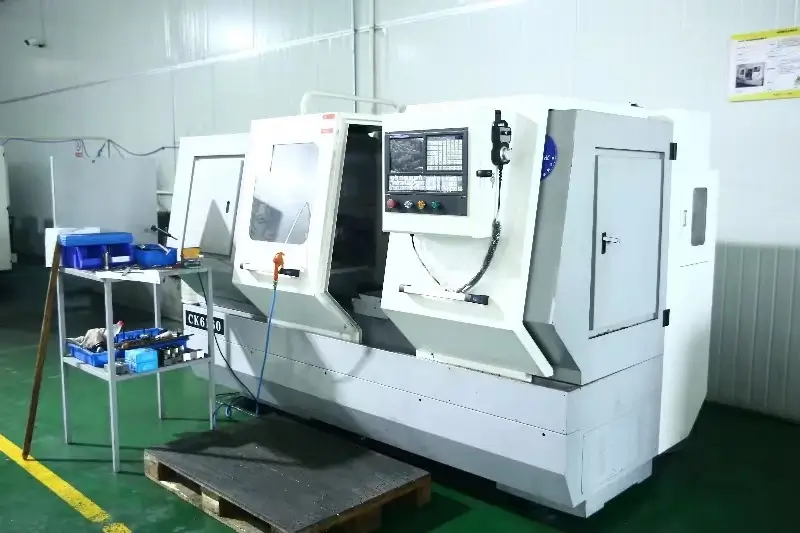
Test reports must correspond to the product you are purchasing and clearly specify the test conditions. We recommend that you request the manufacturer to provide a report that includes the model, product number or batch, drawing version, test date, test conditions, acceptance limits, and actual results. Pay particular attention to pressure resistance, leakage, and operational checks: the pressure resistance test verifies the product’s ability to withstand the specified test pressure; leakage tests must distinguish between external oil leaks and internal leaks, the latter being the flow of fluid from the high-pressure chamber to the low-pressure chamber within the cylinder; operational checks focus on whether extension and retraction are normal and whether there is any sticking. ISO 10100:2020 covers the acceptance and functional testing of hydraulic cylinders and can serve as a reference for both parties when agreeing on a test plan; specific items and parameters must still be specified in the contract or inspection documents.
Factory acceptance testing and durability validation must be considered separately. Passing a single pressure or extension/retraction test does not directly prove that the hydraulic cylinder can withstand high-frequency reciprocating motion, impact, or corrosive environments over the long term. For example, since waste compaction equipment operates frequently, you should further inquire about cycle test records under similar design, load, and operating frequency conditions—that is, performance checks after repeated operation. Even if the manufacturer provides the number of test cycles, you must verify the pressure, stroke, temperature, and failure criteria. Test results for other models are only of reference value if the manufacturer can explain the comparability between the design and the operating conditions.
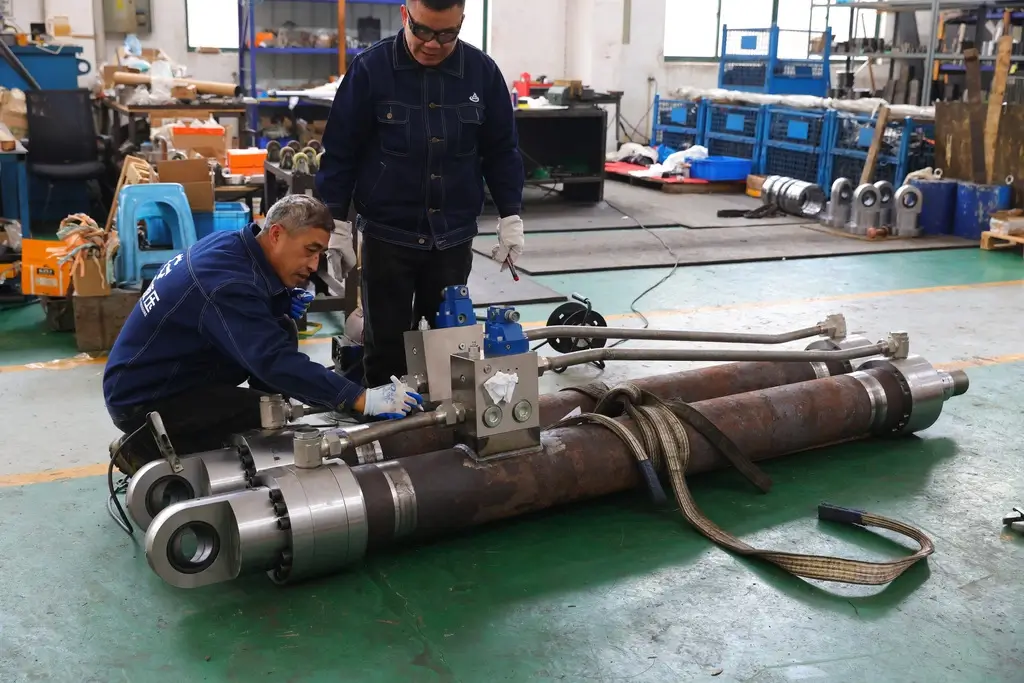
Traceability means being able to trace a finished product’s manufacturing records back to its part number. Based on project requirements, you can ask the manufacturer to explain how they link material lots, seal part numbers and lots, key machining records, assembly records, and final test reports. For welded cylinders, you may also request that applicable welding and inspection records be linked. For example, if a batch of seals is later found to be defective, complete records should help the manufacturer identify which finished products used that batch of seals, thereby determining the scope of inspection required. A QR code or serial number on the finished product is merely the entry point for traceability; it is also necessary to verify that the underlying records are complete.
A practical approach is: Before placing an order, request valid certificates, redacted test reports for similar products, and a sample set of traceability records; then, during the inspection, randomly select one cylinder from the current order for verification. Check whether its physical serial number matches the drawing version, production records, and factory test results, and agree in advance which items will be inspected individually, which will be sampled, and which will be performed only during the design verification phase. This way, you can clarify exactly what the manufacturer means by “100% inspection” and avoid relying on sample reports as the basis for accepting the entire batch.
RFQ Checklist for Sourcing Custom Hydraulic Cylinders
RFQ stands for Request for Quotation. When purchasing custom hydraulic cylinders, the more specific the operating conditions, drawings, and acceptance criteria you provide, the easier it will be for manufacturers to provide a feasible quote. We recommend that you ask all candidate manufacturers to quote based on the same set of requirements and clearly specify which products, tests, documentation, and services are included in the quote.
Custom Hydraulic Cylinder RFQ Checklist
The table below can serve as a checklist when you send a request for quotation to a hydraulic cylinder manufacturer.
| RFQ Item | Information to Provide |
|---|---|
| Application | Equipment type and cylinder function |
| Cylinder Type | Single-acting or double-acting |
| Load Requirements | Required pushing and pulling force |
| Operating Pressure | Normal and maximum system pressure |
| Cylinder Dimensions | Bore diameter, rod diameter and stroke |
| Installation Dimensions | Retracted length and extended length |
| Mounting Configuration | Mounting type, pin dimensions and installation space |
| Hydraulic Connections | Port size, thread type, location and orientation |
| Operating Conditions | Speed, cycle frequency and operating hours |
| Hydraulic Fluid | Fluid type and operating temperature |
| Working Environment | Indoor/outdoor use, dust, moisture and corrosion exposure |
| Special Features | Cushioning, position sensors or load-holding requirements |
| Quality Requirements | Inspection items, test conditions and required reports |
| Technical Documents | Drawings, samples, CAD files and applicable revisions |
| Order Information | Sample quantity, bulk quantity and annual demand |
| Delivery Requirements | Destination, required delivery date and packaging |
FAQs
Q1: What Information Should I Send a Hydraulic Cylinder Manufacturer?
You should provide the equipment’s intended use, drawings or sample information, working load, operating pressure, and potential pressure peaks, as well as the bore diameter, rod diameter, stroke, mounting dimensions, and port specifications. The bore diameter refers to the inner diameter of the cylinder barrel; the rod diameter refers to the diameter of the piston rod; and the stroke refers to the distance the piston rod extends and retracts. Also specify the operating speed, operating frequency, hydraulic fluid type, temperature range, corrosive environment, purchase quantity, and desired delivery date, and indicate the units of measurement. Selecting a hydraulic cylinder requires a comprehensive consideration of these conditions; it cannot be determined based solely on thrust or external dimensions.
If you do not have complete drawings, you can first provide the installation space, required motion, and load so that the manufacturer can propose a solution, which can then be confirmed by both parties. For example, when replacing an old hydraulic cylinder, photographs can help identify the structure but cannot replace measurements of mounting hole spacing, port threads, and fully retracted length. Parameters that have not yet been determined should be marked as “To be confirmed by engineering”; do not make guesses just to fill out the quote request form.
Q2: What Certifications Should a Hydraulic Cylinder Supplier Have?
There is no single list of certifications that applies to all hydraulic cylinder procurement projects. You can consider valid ISO 9001 Quality Management System certification as one of the criteria for supplier screening, and verify whether the scope of certification covers the relevant design or manufacturing operations, as well as the actual production location. This certification attests that the quality management system has been certified; it does not replace testing and acceptance of specific products. Other certification requirements should be determined based on the equipment’s intended use, the target market, and end-customer requirements.
For example, if the certificates provided by the manufacturer cover only sales operations, you’ll need to conduct further verification of the production facility. For additional certifications specified by the customer, you should also confirm whether they apply to the company as a whole, a specific product line, or the products being supplied for this order. You can verify the status through the certifying body or IAF CertSearch; if there has been a revision to the standard, you should also confirm the transition arrangements with the certifying body.
Q3: How Can I Audit a Hydraulic Cylinder Factory in China?
It is recommended that you conduct the audit in the following order: “company identity, production process, inspection capabilities, and traceability of records.” First, verify the business license, contract parties, and actual factory address, then review the machining, welding, cleaning, assembly, and testing processes relevant to your products. For outsourced processes such as electroplating or heat treatment, understand how the supplier selects subcontractors, accepts products, and handles nonconforming items. You can either arrange for your own technical personnel or commission a third-party organization with relevant manufacturing audit capabilities.
A practical approach is to randomly select a hydraulic cylinder on-site and ask the factory to retrieve the corresponding drawing version, material records, and test reports, while also checking the calibration records of the testing equipment. Remote video inspections are suitable for preliminary screening; however, for new suppliers, complex custom products, or critical batch orders, on-site audits are more effective for verifying details. Factory audits assess supply capabilities; product inspection is still required to determine whether this specific order meets quality standards.
Q4: What Is a Typical MOQ for Custom Hydraulic Cylinders?
MOQ stands for Minimum Order Quantity. There is no uniform industry standard for the minimum order quantity of custom hydraulic cylinders; some manufacturers accept single-unit samples or small-batch orders. For example, Hengshui states in its official quotation guidelines that customization is available starting from 1 unit, but this is merely that manufacturer’s commercial policy and should not be considered a commitment from all suppliers.
You should inquire separately about the minimum order quantities for samples and bulk orders, as well as any costs associated with tooling or engineering development. For example, the unit price for a single sample of a hydraulic cylinder may differ significantly from that of 50 units in mass production, as the upfront costs for design, machine calibration, and tooling are spread over different quantities. For smaller quantities, you may ask if the dimensions can be adjusted based on an existing, proven design to minimize specialized development work.
Q5: How Long Does Custom Hydraulic Cylinder Production Take?
There is no standard lead time for custom hydraulic cylinders; structural complexity, material availability, specialized machining, order quantity, and factory scheduling all affect the production cycle. As a public example, Prince Manufacturing lists a lead time of 4–7 weeks for its custom products, depending on the product line; this can help you understand the format of manufacturers’ quotes but should not be taken as a direct lead time commitment from Chinese suppliers or GY Hydraulic.
When requesting a quote, ask the manufacturer to list the timeframes for design confirmation, sample manufacturing, sample validation, and mass production separately, and to clearly specify when the lead time begins. For example, “calculated from the date drawings are approved and the deposit is received” is entirely different from “calculated from the date the inquiry is received.” You should also distinguish between the factory completion date, shipment date, and estimated arrival date; time required for sample revisions, transportation, and customs clearance must be arranged separately.
Q6: Which Hydraulic Cylinder Tests Should Be Included Before Shipment?
Prior to shipment, dimensional inspections, pressure tests, leak tests, and functional tests should be agreed upon based on the product’s structure and intended use. Leak tests should cover external oil leaks and, where applicable, internal leaks—that is, oil leakage between different chambers within the cylinder. Functional testing should focus on full-stroke extension and retraction, smooth operation, and the corresponding functions when the cylinder is equipped with buffers, sensors, or control valves. ISO 10100:2020 is the relevant standard for hydraulic cylinder acceptance and functional testing and can serve as a reference for developing an inspection plan.
You should specify in the order the test pressure, pressure hold time, acceptance limits, whether testing is to be conducted on every unit or by sampling, and the content of the report. For example, for cylinders equipped with position sensors, signal verification requirements must be agreed upon; simply confirming that the piston rod can extend and retract is insufficient. Validation tests such as fatigue, endurance, or salt spray testing should be arranged separately according to application requirements; it cannot be assumed that every shipped product has undergone these tests, nor can a single successful pressure test be used to infer service life.
Q7: How Do OEM and ODM Hydraulic Cylinder Services Differ?
In custom procurement, OEM typically refers to a manufacturer producing products based on your drawings and technical specifications; ODM typically refers to a manufacturer undertaking a significant amount of design work based on your functional requirements before manufacturing and supplying the products. OEM stands for Original Equipment Manufacturer, and ODM stands for Original Design Manufacturer; however, different suppliers may not use these terms consistently, so you need to confirm the actual scope of services.
If you already have a complete, validated design, the OEM model—manufacturing to your drawings—is usually more straightforward. If you only have load, installation space, and motion requirements, an ODM service that includes design and development may be more appropriate. For example, having the manufacturer select the cylinder bore, rod diameter, seals, and cushioning structure already involves design work. Before requesting a quote, clarify who is responsible for design calculations, drawing approval, sample verification, and subsequent changes, as well as the ownership of drawings and specialized tooling.
Q8: How Can Buyers Verify Replacement Seals and Spare-Parts Support?
You should request that the manufacturer provide a spare parts list corresponding to the cylinder model, part number, and design version, clearly specifying the part numbers, contents, material specifications, and installation instructions for the seal repair kit. A seal repair kit is a set of replacement seals designed for a specific cylinder. Reputable manufacturers will provide a seal kit identification tool or parts catalog to help buyers match the correct configuration; knowing only the bore and rod diameters may not be sufficient to select the right repair kit.
The most direct way to verify this is to request a quote for a corresponding repair kit at the same time you purchase the hydraulic cylinder, asking for confirmation of price, delivery time, minimum order quantity, and future supply arrangements. For example, you can ask the manufacturer to provide a spare parts quote based on the sample number to check whether they can accurately identify the corresponding version. If seal models or materials need to be replaced, you should ask the manufacturer to confirm compatibility with the original hydraulic fluid, temperature, and pressure conditions, and agree in advance on the method of spare parts support after the product is discontinued.
Choosing a Trusted Hydraulic Cylinder Manufacturer
From standard hydraulic cylinders to custom solutions, we help you improve equipment performance, delivery reliability, and batch consistency
Explore Rivmate Cases

Hey There, I'm Melody!
We are a hydraulic cylinder manufacturer. For over 20 years, we have focused on producing reliable hydraulic cylinders. Need a hydraulic cylinder solution? Feel free to contact us.