
Home / What is a Single Acting Hydraulic Cylinder?
What is a Single Acting Hydraulic Cylinder?
- Author: GY Hydraulic
- 20+ Years of Manufacturing
A single-acting hydraulic cylinder is a type of cylinder that utilises hydraulic fluid to generate thrust in only one direction of movement. A common design is one in which the piston rod extends when fluid is supplied; when the fluid is drained, a spring, the weight of the load or an external mechanism causes it to retract. For example, the lifting of a tipper lorry’s body may be hydraulically driven, whilst its descent relies on the body’s own weight.
When selecting a single-acting hydraulic cylinder, the key consideration is the return force. This must be sufficient throughout the entire stroke to overcome friction and allow the hydraulic fluid to drain smoothly. If the equipment requires the load to be actively retracted and gravity alone is insufficient to complete the return stroke, a double-acting design should be considered. This article will help you determine whether a single-acting hydraulic cylinder is suitable for your equipment by examining its operating principles, applicable scenarios and key selection criteria.
Table of Contents
Single-Acting Hydraulic Cylinders Explained
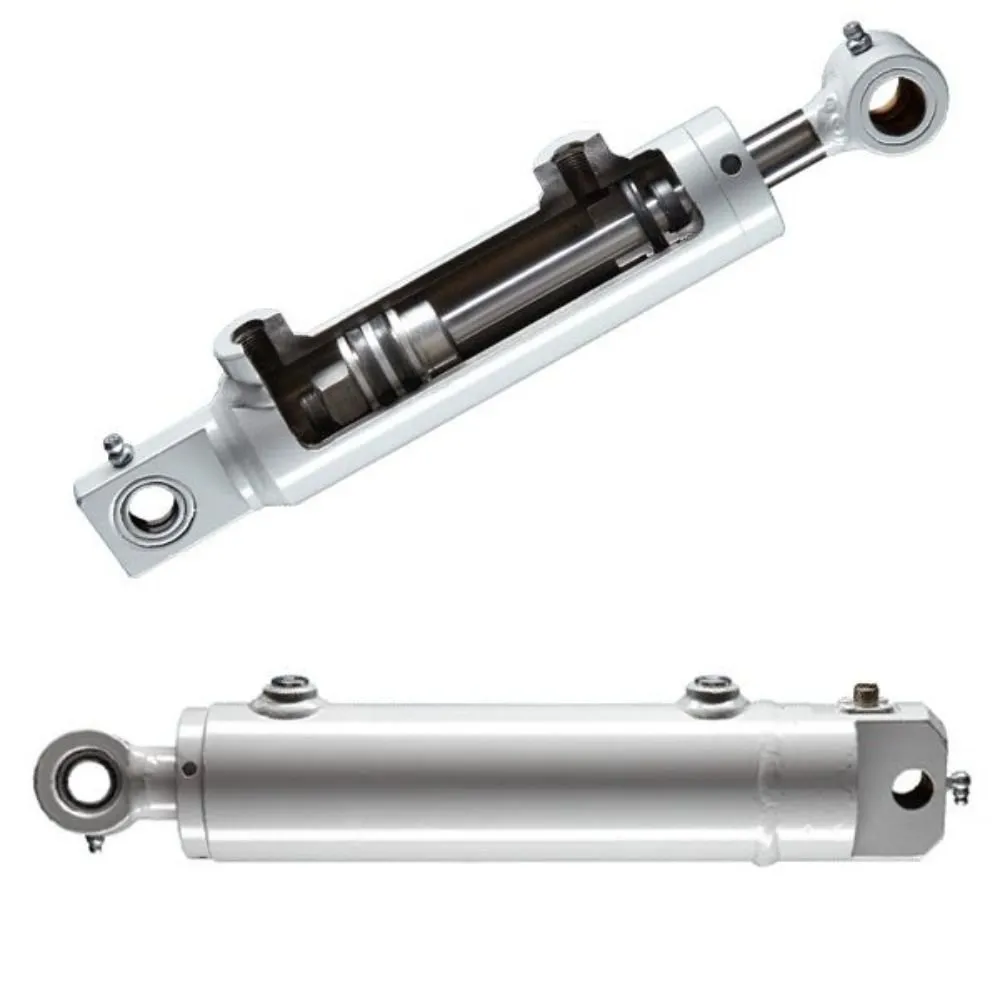
A single-acting hydraulic cylinder uses hydraulic fluid to generate driving force in only one direction of movement. A common design is one in which the cylinder extends when fluid is supplied and retracts when fluid is drained, relying on a spring, the weight of the load or an external mechanism. ‘Single-acting’ refers to the method of actuation; it does not mean that the cylinder can only move once.
How Does It Work?
When hydraulic fluid enters the working chamber of the cylinder, the hydraulic pressure drives the piston or plunger to move. When retraction is required, the control valve opens the return line; a spring or external load pushes the cylinder back, and the fluid flows back into the reservoir. The hydraulic pump does not ‘suck’ the piston rod back. Some single-acting cylinders are designed to retract hydraulically and extend via an external force; therefore, one should consult the product’s hydraulic circuit diagram rather than relying solely on the direction of the piston rod’s movement.
When Is It a Good Fit?
If the mechanism only requires hydraulic driving force in one direction and has a reliable return force throughout the full stroke, a single-acting design is usually suitable. For example, spring-return hydraulic tools can retract after pressure is relieved; certain tipper lorry lifting cylinders retract under the weight of the load. The key factor is not the weight of the load, but whether friction and return flow resistance can still be overcome at the most unfavourable position during retraction.
If the mechanism operates horizontally and there are no springs or other return forces, a single-acting cylinder may come to a halt partway through its stroke. Double-acting cylinders should be considered when the load needs to be actively retracted, or when movement in both directions must be strictly controlled. Even when relying on gravity for return, a suitable valve must be used to control the descent; a single-acting cylinder alone cannot prevent the load from dropping suddenly.
What Should You Check Before Choosing One?
When requesting a quotation, please clearly specify the required thrust, stroke, operating pressure, mounting orientation, and the force used to achieve the return stroke. The stroke is the distance the piston rod needs to travel. The theoretical thrust can be roughly estimated using ‘oil pressure × effective pressure area’; the effective pressure area is the area over which the oil pressure actually acts to generate axial force. Actual selection must also take into account friction, the installation angle and the system’s allowable pressure; it cannot be estimated based solely on the cylinder bore diameter.
A common mistake is to verify only the extension thrust without checking the return stroke. You can ask the supplier to answer a specific question: at the end of the stroke and when the load is at its lightest, what force causes the cylinder to return fully to its starting point? If the answer is unclear, it cannot yet be determined whether a single-acting solution is suitable.
How a Single-Acting Hydraulic Cylinder Works
A single-acting hydraulic cylinder is driven by hydraulic fluid in only one direction. A common design involves hydraulic pressure driving the cylinder to extend, whilst a spring, the load’s own weight or an external mechanism drives it to retract. To understand its operation, it is essential to recognise the driving force for the working stroke, the retracting force and the return oil passage.
1. Oil Pressure Drives the Working Stroke
The pump delivers fluid into the working chamber—that is, the internal space that drives the piston or plunger. When the hydraulic pressure is sufficient to overcome the load and frictional resistance, the cylinder begins to move. For example, a single-acting lifting cylinder raises a platform by supplying fluid. Once the fluid supply is stopped, if the control valve closes the return passage, the cylinder will not retract automatically simply because the pump has stopped; whether it can actually maintain its position depends on the leakage from the valves and seals.
2. A Spring or External Force Drives the Return Stroke
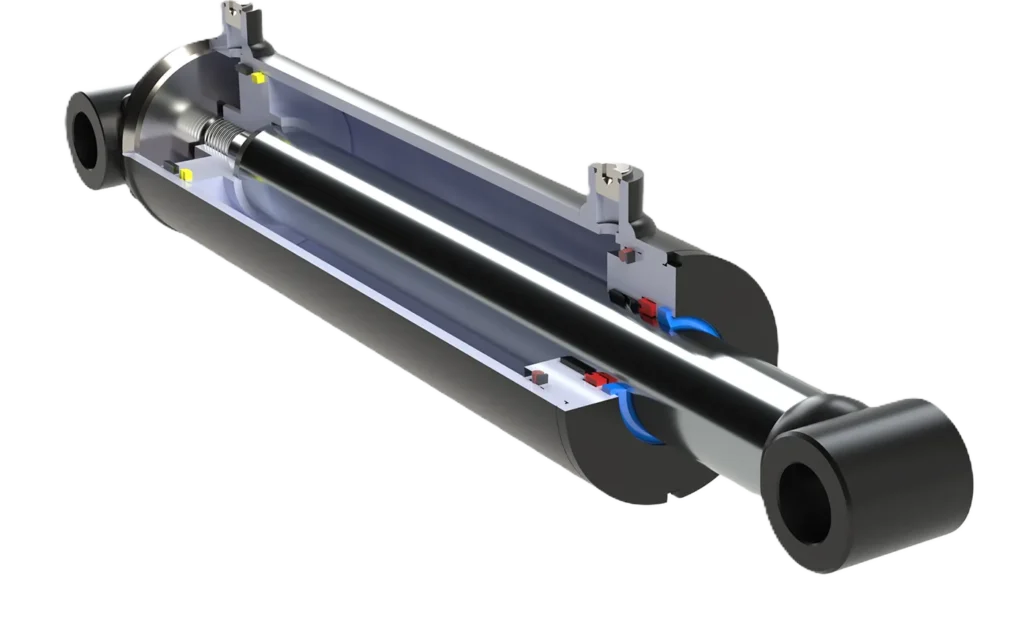
During the return stroke, the control valve opens the return flow path, and a spring or external load pushes the piston, forcing the fluid back into the reservoir. The hydraulic pump does not ‘suck’ the single-acting cylinder back. For example, when a tipper body is lowered, it is usually the body’s own weight that pushes the lifting cylinder back. However, the return force must be sufficient throughout the entire stroke to overcome friction and return flow resistance; otherwise, the cylinder may retract slowly or stop partway.
3. Return Flow Affects Retraction Speed
Whether a cylinder can retract smoothly depends both on the return force and on the unimpeded flow of the hydraulic fluid. Kinked hoses, loose fittings or insufficient valve opening will all increase return flow resistance. For example, if the same cylinder can lower under a heavy load but retracts slowly when unloaded, it may be because the return force under no-load conditions is insufficient to overcome the existing resistance. For mechanisms that rely on gravity for lowering, a suitable lowering control valve is also required to prevent the load from descending too rapidly.
How to Determine Suitability
First, confirm whether the equipment requires active force in only one direction, then check whether it can reliably return to its original position in the other direction. If your equipment requires hydraulic lifting but can descend under its own weight, a single-acting design may be considered. If significant resistance must be overcome during both extension and retraction—for example, if the workpiece must be actively pulled out after being pushed in—a double-acting cylinder is generally more suitable.
Taking a vertical lifting platform as an example, the selection process must not only verify whether it can lift a full load but also confirm whether an empty platform can be lowered all the way from the highest position to the lowest position. You should provide the supplier with the platform’s own weight, maximum load, stroke, mounting method and expected descent time. If a link or scissor mechanism is used, the dimensions of the mechanism must also be provided, as changes in angle will alter the return force acting on the cylinder. The fact that the platform can descend under full load does not guarantee that it will return smoothly when unloaded.
Consider horizontally mounted material-feeding mechanisms: if there is no external mechanism to push the piston rod back, spring return or other return power is required. When selecting a spring-return type, ask the supplier to verify the spring force across the entire stroke, particularly to ensure that it can still overcome seal friction, mechanical resistance and return flow resistance as the piston rod nears full retraction. If the return stroke involves dragging a heavy load, or must be completed within a specified time, a double-acting solution should be further evaluated.
Core Components and Hydraulic Circuit Layout
A typical circuit for a single-acting hydraulic cylinder is as follows: oil from the reservoir flows through the hydraulic pump and control valve into the cylinder, causing it to perform work; during the return stroke, an external force pushes the cylinder, and the oil returns to the reservoir via the control valve. By understanding this path, you will be able to distinguish why the cylinder extends, remains extended or retracts.
Inside the Cylinder
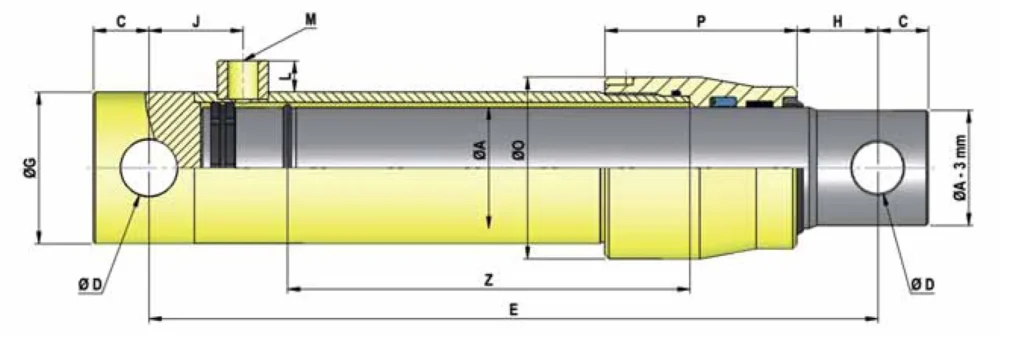
The cylinder barrel houses the hydraulic fluid, whilst the piston or plunger bears the hydraulic pressure and drives the piston rod. The extended end of the rod is typically fitted with guides and seals: the guides help keep the piston rod centred, the seals minimise fluid leakage, and the outer dust seal wipes away contaminants from the rod’s surface. Spring-return types are also fitted with a return spring; models that rely on the weight of the load for retraction may not necessarily have a spring.
Common single-acting cylinders have only one working port for driving, through which both supply and return fluid pass. If you see other ports, check the drawings first; they may be used for bleeding or venting, and you cannot determine whether a cylinder is double-acting based solely on the number of ports.
From Tank to Cylinder
The reservoir stores fluid, the hydraulic pump delivers it, and control valves determine the flow direction. When the valve is actuated, pressurised fluid enters the working chamber and drives the piston or ram. During the return stroke, the valve opens the return path, and the cylinder is retracted by a spring, gravity or an external mechanism. For example, a manual hydraulic jack can be used to lift a load by supplying fluid via a hand pump; once the return valve is opened, the load pushes the ram back into the cylinder.
The circuit typically also requires a relief valve to limit system pressure; a pressure gauge facilitates pressure monitoring. Specific valve components should be selected according to the equipment’s function, with particular attention given to whether the load needs to be held in position during operation. Enerpac’s single-acting system documentation illustrates a typical configuration with a single hose connecting the pump to the cylinder, but the actual components required will vary depending on the application.
Extend, Hold and Return
These three actions depend on how the control valve routes the fluid: when fluid is supplied, the cylinder moves in the working direction; when the valve seals the working port, the cylinder can temporarily hold its position; and when the valve opens the return path, external return forces can then expel the fluid. Stopping the pump does not equate to opening the return path, nor does it mean that the load has been securely locked in place. Whether a holding function is available should be verified against the specific valve type and equipment requirements. Some single-acting pump-valves will return immediately upon releasing the button, whilst others will hold their position until the operator issues a lowering command.
What to Check on a Circuit Drawing
When reviewing a hydraulic circuit diagram, you should trace the line back from the cylinder’s working port: which valve port is it connected to? Where does the oil come from during extension? Where does the oil return to the tank during retraction? If the load needs to be held at an intermediate position, which component provides the hold? These four questions are a better indicator of whether a circuit is suitable than simply counting ‘one or two oil lines’.
A common mistake is to check only whether the pump can provide sufficient extension pressure, whilst neglecting the return circuit. If the return valve is not open, the quick-change coupling is not fully engaged, or there is excessive resistance in the piping, the spring or load may prevent the cylinder from retracting smoothly. When selecting a cylinder, please provide the supplier with the required thrust, stroke, source of retraction force and load-holding requirements.
Spring-Return, Load-Return, and Telescopic Designs
‘Spring-return’ and ‘load-return’ refer to the force used to return a single-acting hydraulic cylinder to its home position; ‘telescopic’ refers to how the cylinder achieves a long stroke. Telescopic cylinders can also be single-acting or double-acting. When selecting a cylinder, first determine the return force, then assess whether a multi-stage telescopic structure is required.
a. Spring-Return Cylinders
In spring-return cylinders, the internal spring is compressed or extended as the hydraulic fluid drives the working stroke. Once the control valve opens the return flow path, the spring pushes the piston or plunger back, expelling the fluid. This type is suitable for equipment where the cylinder must return to its starting position under its own power after the external load has been removed. For example, a spring-return hydraulic tool can retract its plunger after completing a pressing action.
The spring does not provide the same force at every position along the stroke. You should ask the manufacturer to verify the position where spring force is at its lowest during the return stroke to ensure it can still overcome seal friction and mechanical resistance. If you need to actively retract a very heavy load, or require a long stroke and a specific return speed, the mere fact that a cylinder is ‘spring-return’ is not sufficient to guarantee suitability.
b. Load-Return Cylinders
Load-return cylinders do not rely on hydraulics to generate the return force; instead, the weight of the lifted load or the mechanism itself is used to retract the cylinder. For example, after a tipper lorry has been lifted, the weight of the body can be utilised to retract a single-acting lifting cylinder. This eliminates the need for a separate hydraulic drive chamber for the retraction direction; however, sufficient external force must be present throughout the entire return stroke, and the return oil passage must remain unobstructed.
When assessing suitability, do not consider only the starting position where the load is heaviest. You should also check the position where the load is lightest and the mechanism is at its most unfavourable angle: at this point, can the cylinder still overcome friction and retract fully? If the mechanism moves horizontally and the load cannot provide a return force, load-return operation is generally unsuitable. The descent speed of the load must also be controlled by a suitable valve; smooth operation cannot be guaranteed by the cylinder alone.
c. Telescopic Cylinders
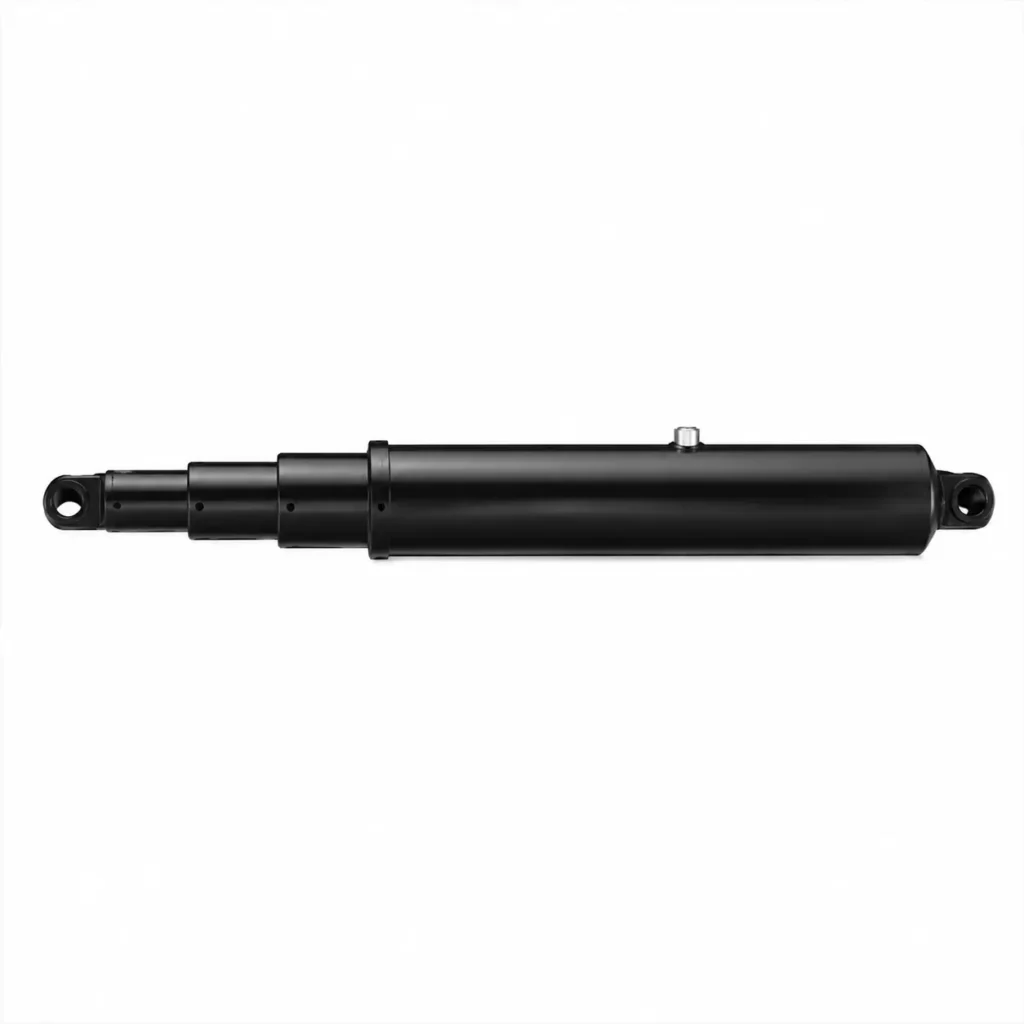
Telescopic cylinders consist of multiple nested sleeves, providing a long stroke within a relatively short closed length. They resolve the conflict between installation space and stroke length. Common telescopic cylinders used in tipper lorries are single-acting with load-return; however, for equipment requiring active hydraulic retraction, double-acting telescopic cylinders may also be used. Therefore, ‘telescopic’ cannot be directly equated with ‘gravity-return’.
You should first compare the required stroke with the permissible closed installation length. If a standard single-stage cylinder fits and meets the load requirements, there is no need to switch to a telescopic cylinder simply to increase the number of stages; if it does not fit, ask the manufacturer to verify the thrust, speed and stability at full extension on a stage-by-stage basis.
How to Choose?
When requesting a quotation, clearly specify the following three conditions to the supplier: the force required in the working direction, the force used for the return stroke, and the maximum space occupied when retracted.
For example, ‘hydraulic lifting, lowering by the vehicle’s own weight, limited installation space on the chassis’ points to a single-acting, load-return telescopic cylinder; ‘hydraulic pushing, requiring self-retraction after unloading’ may warrant an initial assessment of a spring-return cylinder. Ultimately, the return force over the full stroke and the return flow resistance must be verified; the model must not be determined solely on the basis of the application’s description.
Single-Acting vs. Double-Acting Cylinders
A single-acting hydraulic cylinder performs work in one direction only using hydraulic pressure; a double-acting hydraulic cylinder performs work in both the extension and retraction directions using hydraulic pressure. You should first check whether the equipment requires a hydraulic return stroke before deciding which type to select.
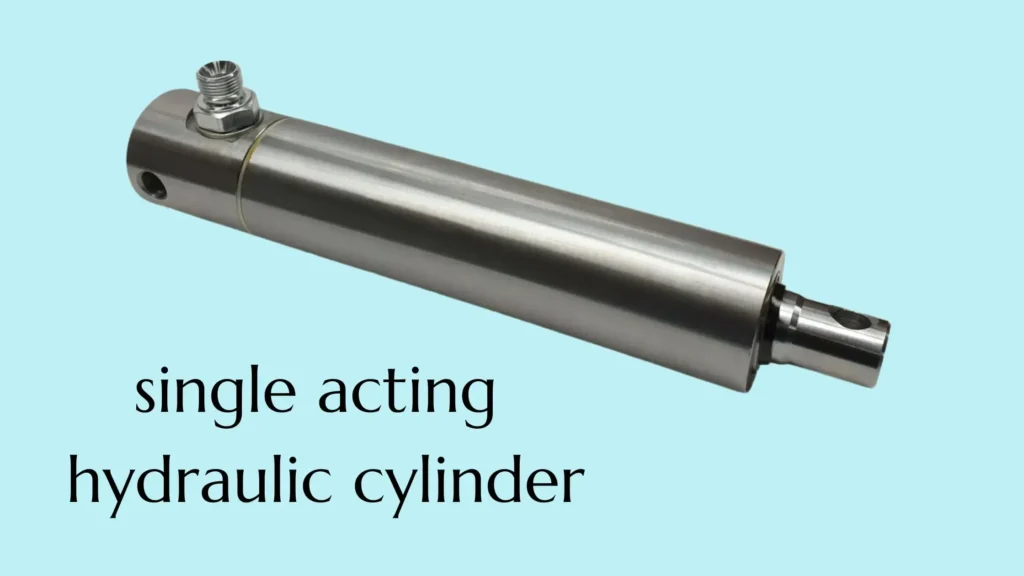
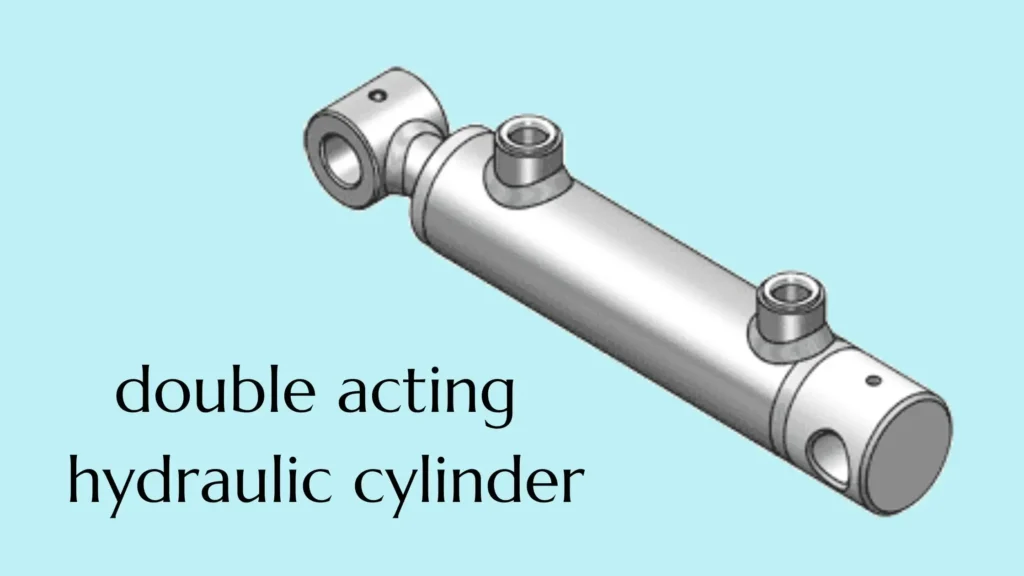
| Comparison Criteria | Single-acting Hydraulic Cylinder | Double-acting Hydraulic Cylinder |
|---|---|---|
| Direction of Operation | Hydraulic pressure drives in one direction, usually extension. | Hydraulic pressure drives both extension and retraction. |
| Return Mechanism | Relies on springs, the weight of the load, or an external mechanism. | Relies on hydraulic drive. |
| Typical Hydraulic Circuit | Usually a single circuit for both supply and return. | Usually two circuits, one for extension and one for retraction. |
| Suitable Applications | Reliable return force throughout the full stroke. | Where the load needs to be actively pulled back, or return movement requires precise control. |
| Key Selection Criteria | Whether the return force is sufficient and whether the return flow is smooth. | Whether both the extension thrust and retraction pull are sufficient. |
For example, if a tipper body can complete the entire lowering process under its own weight, a single-acting cylinder may be considered. For horizontal slides where the cylinder needs to actively pull the load back, a double-acting cylinder is generally more suitable. The retraction force of a double-acting cylinder cannot be directly determined based on the extension thrust, as the piston rod occupies part of the effective pressure area on the return side—that is, the area over which the hydraulic pressure exerts its force.
When requesting a quotation, please specify the required thrust, stroke, operating pressure, mounting orientation, and the mechanism used to return the load. When selecting a single-acting cylinder, it is particularly important to check the position where the load is lightest and retraction is most difficult. If reliable retraction cannot be achieved at this point, a single-acting cylinder should not be selected simply because the circuit is simpler. Both types of cylinders require suitable valves to control the load; a double-acting design does not, in itself, guarantee a fall-arrest function.
Advantages and Limitations of Single-Acting Cylinders
Single-acting hydraulic cylinders are suitable for equipment that requires hydraulic power in only one direction, whilst a reliable return force is provided in the opposite direction. A common design involves hydraulic pressure driving the cylinder outwards, whilst a spring, the weight of the load or an external mechanism drives it inwards. The advantage lies in the fact that the circuit is generally simpler; the main limitation is the inability to actively complete the return stroke using hydraulic power alone.
Advantages
Single-acting cylinders generally require only a single hydraulic circuit for both supply and return, allowing for a simpler configuration of piping and valves. If the load itself can effect the return stroke, there is no need to provide a separate hydraulic drive for retraction. For example, in a load-return lifting mechanism, the cylinder can be pushed back by the weight of the load once the return line is opened.
Spring-return types are suitable for equipment that must return to its original position automatically after the external load has been removed, such as certain hydraulic clamping or pressing tools. However, the spring occupies installation space, and its force also affects the net thrust of the working stroke—that is, the force available to drive the load after the spring resistance has been deducted. One cannot assume that the entire piece of equipment will necessarily be cheaper or lighter simply because the ‘single-acting structure is simple’.
Limitations
The return stroke of a single-acting cylinder depends on a spring or an external force. If a load-return cylinder lacks sufficient weight to force it back during a certain portion of the stroke, or if the spring force is insufficient, it may come to a halt partway through. Even if the return force is sufficient, a slow return or complete stoppage may occur if the valve is not open, the quick-connect coupling is not engaged, or the return line is obstructed.
For example, after pushing a slide horizontally, a load-return single-acting cylinder is unsuitable if there is no spring or other mechanism to pull the slide back. Where active retraction of the load is required, or where there are specific requirements for return force and speed, a double-acting cylinder should be considered. Conversely, gravity-assisted return is not necessarily uncontrolled; the descent speed can be regulated by a suitable valve, but must be designed according to the load conditions.
How to Decide
When selecting a cylinder, first confirm the conditions: the force required in the working direction, the source of force for the return stroke, and whether the cylinder can return fully to its home position from the most unfavourable position. If the return stroke relies on a spring, ask the supplier to verify the spring force throughout the full stroke and its impact on the net thrust; if the return stroke relies on the load, verify the return capability when the load is at its lightest and the mechanism is at its most unfavourable angle. Then confirm whether the return flow path matches the target return speed.
A common mistake is to focus solely on the rated thrust and stroke without specifying the return conditions. You can include phrases such as ‘must return automatically after the load is removed’ or ‘returns entirely under its own weight’ directly in your quotation request. This makes it easier to select the correct cylinder than simply stating ‘a single-acting cylinder is required’.
Common Applications and Operating Conditions
Single-acting hydraulic cylinders are suitable for equipment that requires hydraulic driving force in only one direction, whilst a reliable return force is available in the opposite direction. Common applications include lifting, dumping and certain clamping tools. When assessing suitability, it is important to consider the entire motion cycle, particularly whether the cylinder can return to its starting position following a change in load.
① Lifting and Dumping
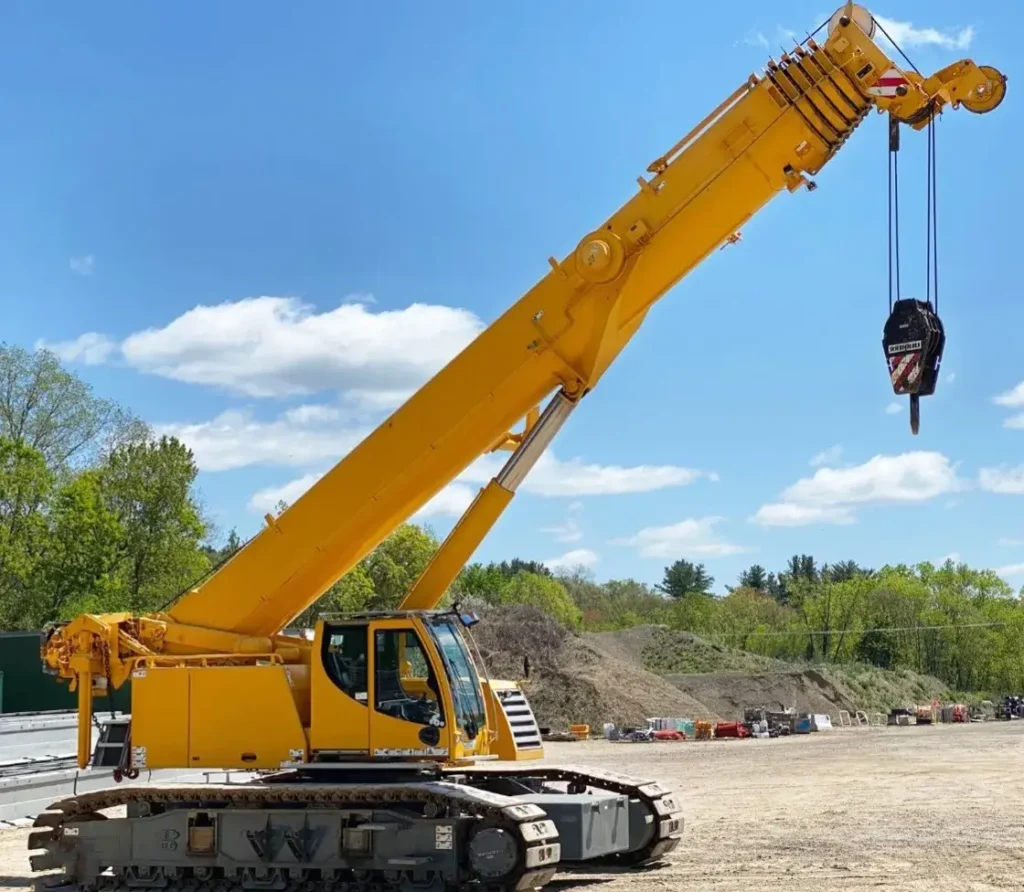
Hydraulic lifting is a common application for single-acting cylinders. When the pump supplies oil, the cylinder lifts the load; once the control valve opens the return line, the weight of the load pushes the cylinder back. For example, tipper lorries and tipper trailers commonly use single-acting telescopic cylinders to lift the body within a limited installation space, after which the body descends under its own weight.
You must not only verify that the body can be lifted when fully loaded, but also ensure that the return stroke can be completed after unloading, when the body is lighter. If the return force provided at a certain position in the mechanism is insufficient, the cylinder may come to a halt partway through. The descent speed also requires appropriate valve control; the fact that the load can push the cylinder back does not mean it will descend smoothly.
② Pressing and Clamping
Some hydraulic pressing, punching and clamping tools utilise spring-return single-acting cylinders. Hydraulic pressure provides the working force, and once the return flow is opened, the spring returns the piston rod to its starting position. For example, after a clamping fixture has completed the clamping action, if the workpiece has been removed, the spring can still provide the return force.
For such applications, it is essential to verify the net working force, i.e. the force available to act on the load after deducting resistance from the spring and other sources. The spring must also have sufficient force throughout the entire stroke to complete the return movement. If the mechanism requires the active retraction of heavier components, or if strict control of the return time is required, a single-acting spring-return type may not be suitable.
③ Operating Conditions to Check
When selecting a model, please provide the supplier with the load, stroke, operating pressure, installation orientation, source of return force, and the minimum start-up and maximum operating temperatures. The stroke is the distance the cylinder needs to travel. When installed horizontally, do not assume that the load will return under the influence of gravity; in outdoor environments with mud, sand or salt spray, it is also necessary to confirm whether the dust seals, piston rod surface and sealing materials are suitable.
A practical method of verification is to examine, separately, the maximum load during the working stroke and the position during the return stroke where the load is lightest and the mechanical angle is most unfavourable. The former determines whether the cylinder can perform work, whilst the latter determines whether it can return to its fully retracted position. If a single-acting cylinder retracts slowly, one should first check whether the control valve, return line and quick-connect couplings are unobstructed; one must not immediately assume that the cylinder is internally damaged.
How to Size and Select a Single-Acting Cylinder
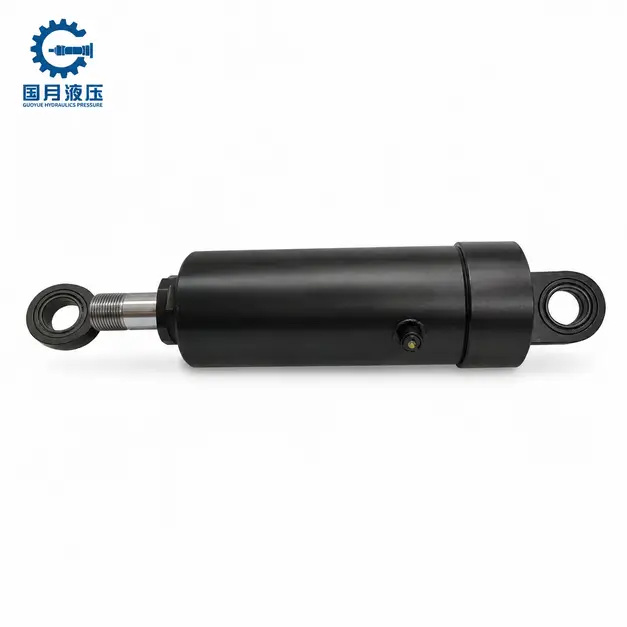
First, determine the force required for the working stroke, then estimate the cylinder bore diameter based on the actual available hydraulic pressure; subsequently, verify the return stroke, stroke length, mounting configuration and speed. When selecting a single-acting cylinder, the return stroke conditions are most commonly overlooked: it only performs work in one direction using hydraulic pressure, whilst in the opposite direction, a spring, the weight of the load or some other external force must be present.
Start With the Required Force
First, determine the force the cylinder must provide along its own axis when the load is at its heaviest and the mechanism is in its most unfavourable position. If the cylinder is pushing the mechanism at an angle, the weight of the load cannot be taken directly as the cylinder’s thrust; you will also need to provide the mounting points and the angle of the mechanism so that the supplier can calculate the actual requirements.
A preliminary estimate can be made using theoretical thrust = pressure at the cylinder × effective pressure area. The effective pressure area is the area over which the hydraulic pressure acts to generate thrust. For example, if a thrust of 50 kN is required, and you plan to calculate based on a working pressure of 10 MPa at the cylinder, the required area is 50 cm², corresponding to a theoretical bore diameter of approximately 80 mm. This is merely a calculation example that ignores friction, back pressure and mounting losses; it is not a recommendation to select an 80 mm cylinder directly. For spring-return types, the resistance generated by the spring during the working stroke must also be deducted.
Check the Return Stroke
Next, ask yourself: once the return oil passage is opened, what force causes the cylinder to return fully to its starting position? For load-return types, check the position with the lightest load and the most unfavourable mechanical angle; for spring-return types, ensure the manufacturer confirms that the spring can overcome seal friction and mechanical resistance throughout the entire stroke. Parker’s product documentation for single-acting spring-return cylinders also requires the provision of load and friction conditions, rather than simply stating ‘spring-return’.
For example, a vertical lifting mechanism is prone to dropping under its own weight when fully loaded, yet may come to a halt after unloading due to reduced return force. In the case of horizontal mechanisms, a single-acting cylinder cannot be expected to retract on its own without a spring or mechanical return device. Return valves, pipework and fittings must also allow the fluid to drain freely.
Match Stroke, Speed and Mounting
Stroke refers to the distance the cylinder needs to travel. In addition to stroke, it is essential to confirm the installed length when fully retracted, the connection dimensions at both ends, and whether the piston rod will come into contact with the frame when extended. When used under compression over a long stroke, the manufacturer should be asked to verify the risk of piston rod buckling, i.e. the risk of a slender rod becoming instable and bending under compression; a sufficiently large bore does not necessarily mean that the rod diameter and mounting method are appropriate.
Speed, in turn, depends on the flow rate entering the cylinder. Ideally, extend speed = flow rate ÷ effective pressure area. Increasing the bore diameter boosts thrust capacity but results in slower movement at the same flow rate. Therefore, when requesting a quotation, you should specify both the target extend time and the available pump flow rate to avoid a situation where the cylinder can move the load but does so too slowly.
Confirm the Complete Specification
The minimum information to be provided to the supplier should include: maximum working load and mechanical position, available pressure at the cylinder, required stroke, installation drawings, target speed, source of return force, as well as hydraulic fluid and temperature conditions. It is also necessary to specify whether load holding at intermediate positions is required; this depends on the valves and the load-holding solution.
Installation, Venting, and Maintenance Essentials
Once a single-acting hydraulic cylinder has been installed, you should first check that it is correctly aligned under load, that the oil circuit is connected and that the venting method is correct, before carrying out a low-load test run in accordance with the manufacturer’s procedures. It typically relies on a spring or external load for retraction; therefore, even if the oil supply is normal, installation binding or a blocked return line may prevent the cylinder from retracting.
Installation and Alignment
During installation, check that the connections at both ends are aligned in both the retracted and extended positions, and that the pin connections can move as intended by the design. Lateral loads are forces that cause the piston rod to bend sideways, which can accelerate wear on guide components and seals. For example, when a hydraulic cylinder drives a slide, the guide rails should bear the weight of the slide to prevent the piston rod from acting as a guide. Before connecting the hoses, ensure the oil ports and fittings are clean, and verify that the hoses will not be pulled taut, kinked or rubbed against the frame throughout the full stroke.
Venting and Bleeding Air
There are two operations here that are easily confused. Ventilation involves allowing the unpressurised chamber of certain spring-return cylinders to breathe through a specified vent port; if the product is fitted with a filtered vent plug, do not block it arbitrarily, and take care to prevent coolant and contaminants from entering. Bleeding, on the other hand, involves expelling air that has become trapped in the hydraulic circuit. Air can cause the movement to become sluggish, jerky or erratic; it is usually necessary to bleed air in accordance with the model-specific instructions following the installation of new pipework, an oil change or disassembly and repair.
Do not use the vent plug as a high-pressure oil port, nor should you bleed air by loosening pressurised fittings. Bleeding procedures may vary depending on the pump, installation orientation and cylinder; follow the relevant manual and, after operation, check the reservoir fluid level and ensure the movement is smooth.
Routine Maintenance
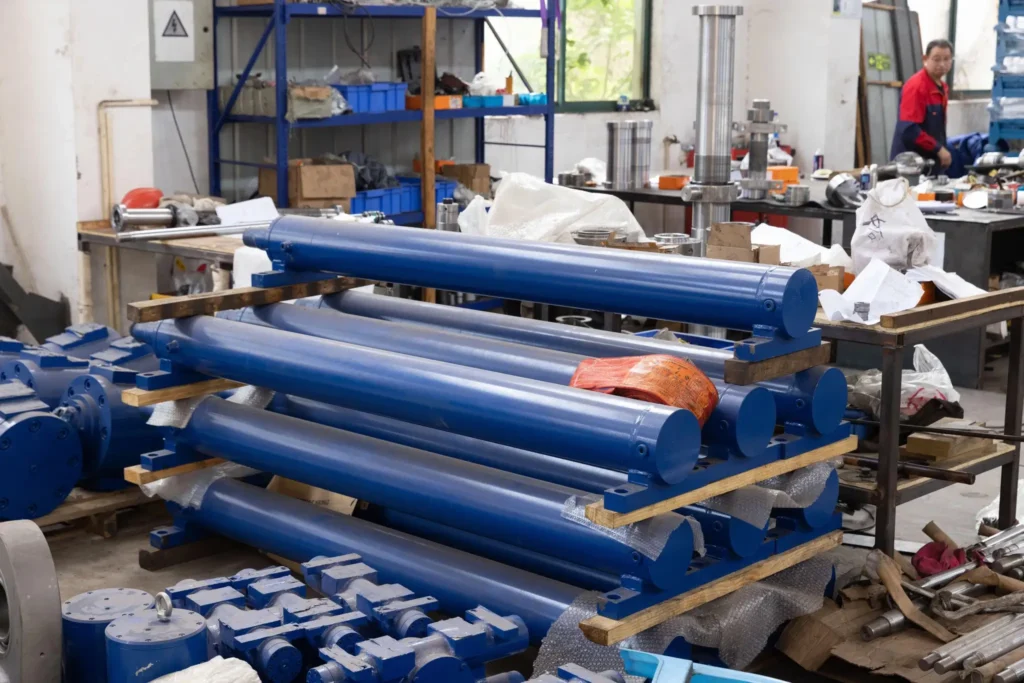
Routine inspections can begin by checking three areas: the piston rod surface for scratches or rust; oil ports, hoses and seals for oil leaks; and pins and mounting seats for looseness or uneven wear. At the same time, ensure that quick-connect couplings are fully engaged and that the hydraulic fluid meets the equipment’s specifications. If the cylinder retracts slowly, first check whether the valve is open, whether there is sufficient return load, and whether the return line is obstructed; do not immediately conclude that the cylinder needs replacing.
Before carrying out repairs, the lifted load must be securely supported, and residual pressure must be released in accordance with the equipment’s procedures. Spring-return cylinders may still retain residual spring force; disassembly should be carried out in accordance with the manufacturer’s maintenance instructions. You may record the normal full-stroke extension and retraction times, along with pressure performance, during installation and acceptance testing; should any significant changes occur in the future, this will provide a specific benchmark for troubleshooting.
Common Failure Symptoms and Troubleshooting
Does a Single-Acting Hydraulic Cylinder Need a Return Spring?
Not necessarily. A single-acting hydraulic cylinder is driven by hydraulic fluid in only one direction; the return stroke can be achieved by a spring, gravity or an external load. For example, if a raised load can descend under its own weight, a return spring may not be required. When selecting a cylinder, you must ensure that the equipment can complete the return stroke even under the lightest load; do not simply check whether it descends when fully loaded.
Can a Single-Acting Cylinder Pull as Well as Push?
Single-acting does not mean it can only push. Some single-acting cylinders are specifically designed to be hydraulically driven to pull, with a spring providing the return. However, a standard single-acting cylinder cannot usually be hydraulically driven to push and pull in separate directions. If your mechanism requires active force in both directions, you should select a double-acting cylinder.
Why Does a Single-Acting Hydraulic Cylinder Have One Port?
It usually has only one working port: this pushes the piston when oil is supplied, and the oil flows back through the same port during the return stroke. The term ‘one’ here refers to the port used for driving; it does not mean that the cylinder body has absolutely no vent or exhaust port. If you see a second opening, check the annotations on the drawing first; do not connect pressurised oil directly to it.
Does a Single-Acting Cylinder Need a Breather Vent?
It depends on the design. Some spring-return cylinders require the non-pressurised chamber to be vented so that air can enter and exit as the piston moves; such vents are usually designed to prevent the ingress of dust and water. Other designs may employ different venting methods. You should consult the manual for that specific model; in particular, do not simply block existing vents, mistaking them for oil leaks.
Can a Single-Acting Cylinder Be Converted to Double Acting?
Generally, this conversion cannot be achieved simply by adding an extra port. A double-acting cylinder requires piston seals, end-face configurations and a rated capacity suitable for bidirectional pressure. If the manufacturer has not explicitly provided a conversion scheme for that model, the safer approach is to select a double-acting cylinder that meets the installation dimensions and load requirements; do not drill holes or connect hydraulic hoses yourself.
How Do You Bleed Air From a Single-Acting Hydraulic Cylinder?
First, secure the load, then follow the equipment manual. A common method is to slowly extend and retract the cylinder several times under low load conditions, allowing air to be expelled with the return flow, whilst checking the reservoir fluid level; for models with a dedicated bleed port, bleed the air according to the manufacturer’s specifications. The procedure may vary depending on the specific cylinder and pump; do not loosen fittings under pressure to ‘bleed’ the system.
What Causes a Single-Acting Cylinder to Retract Slowly?
First, check whether the return force is sufficient: cylinders that rely on the load for retraction may fail to return if the load is too light. Next, check whether the directional control valve is fully open and whether the return oil lines and fittings are blocked or restricted; for spring-return types, the spring should also be inspected. You can record the retraction behaviour under both no-load and loaded conditions to help maintenance personnel distinguish between ‘insufficient return force’ and ‘restricted return flow’; do not assume internal damage to the cylinder straight away.
Can a Single-Acting Hydraulic Cylinder Hold a Load Safely?
A hydraulic cylinder can lift a load, but it cannot rely solely on its internal seals or directional control valves to ensure the load remains stationary over the long term. When temporary load holding is required, a suitable load-holding valve should be installed in accordance with the system design; furthermore, when personnel are working under a load, mechanical supports must also be used. You can apply the following rule of thumb: if a hose rupture or valve leakage would cause the load to fall, the current hydraulic configuration cannot be considered a safe means of support.
Choosing a Trusted Hydraulic Cylinder Manufacturer
From standard hydraulic cylinders to custom solutions, we help you improve equipment performance, delivery reliability, and batch consistency
Explore Rivmate Cases

Hey There, I'm Melody!
We are a hydraulic cylinder manufacturer. For over 20 years, we have focused on producing reliable hydraulic cylinders. Need a hydraulic cylinder solution? Feel free to contact us.