Home / Difference Between Single and Double Acting Hydraulic Cylinder
Difference Between Single and Double Acting Hydraulic Cylinder
- Author: GY Hydraulic
- 20+ Years of Manufacturing
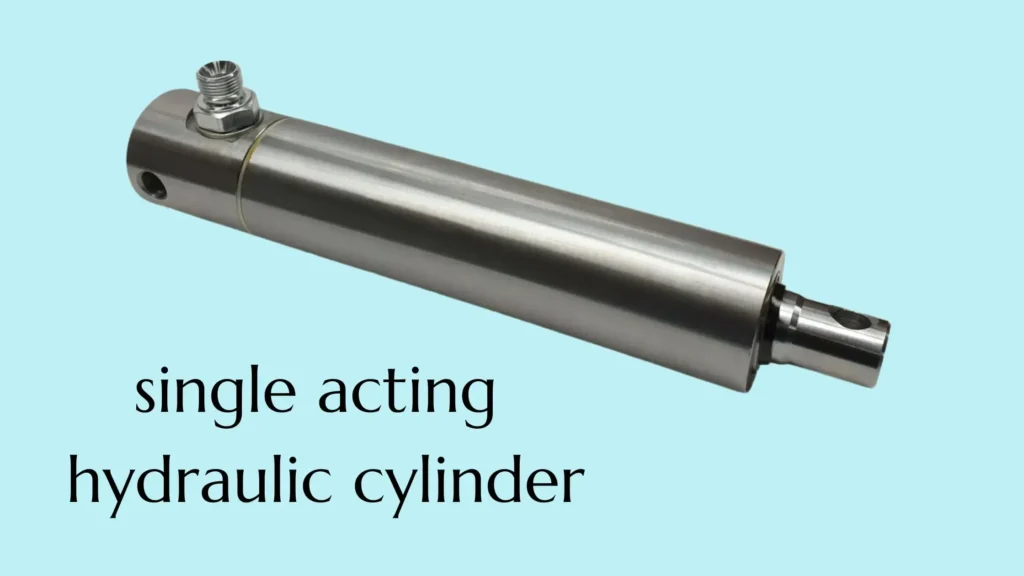
The main difference between single-acting and double-acting hydraulic cylinders is whether hydraulic fluid can drive movement in both directions. A single-acting hydraulic cylinder is driven by hydraulic pressure in only one direction, while the return in the opposite direction relies on a spring, the weight of the load, or other external forces; in a double-acting hydraulic cylinder, both extension and retraction are driven by hydraulic pressure. Therefore, you should not interpret “single-acting” to mean that the cylinder can only extend and cannot retract; it simply refers to the difference in the power source for the two directions.
Taking the common extension operating mode as an example, a single-acting hydraulic cylinder uses pressurized fluid to push the piston rod—that is, the rod that extends from the cylinder body and connects to the load—outward. During retraction, a spring or the load itself pushes the rod back, while the fluid is expelled. A double-acting hydraulic cylinder, on the other hand, alternately supplies fluid to both sides of the piston: fluid enters one side to drive the movement, while it is expelled from the other side. Consequently, you can use hydraulic pressure to both push the load forward and pull it back.
When selecting a cylinder, you must first determine whether the equipment requires force in only one direction and whether there is a reliable external force for the return stroke. If you only need to lift or clamp, and a spring or the load itself can handle the return stroke, a single-acting cylinder will typically meet your needs. If you need to move the load in both directions, or if you must overcome significant resistance during the return stroke, a double-acting cylinder is generally more suitable. A single-acting cylinder is not suitable when there is no reliable return force; similarly, you should not choose a double-acting cylinder simply because “double-acting” sounds more powerful when only a simple unidirectional motion is required.
In particular, you should avoid checking only the extension thrust while ignoring the return conditions. For example, a single-acting cylinder that relies on the load’s gravity to retract may no longer be able to return when installed horizontally, as gravity may no longer push it back along the direction of the rod. You need to make a judgment based on the actual installation orientation, the load, and the return resistance; you cannot assume that the hydraulic cylinder will automatically retract once the oil supply is stopped.
Table of Contents
How Does Each Cylinder Create and Return Motion?
A single-acting hydraulic cylinder is hydraulically driven in only one direction and requires a spring or external force to retract; a double-acting hydraulic cylinder, on the other hand, can be hydraulically driven to both extend and retract. You can start by asking yourself this question: Does the hydraulic cylinder need to actively pull the load during the return stroke? If so, or if you cannot guarantee that an external return force will always be present, you should prioritize a double-acting design.
Pressure-Driven Stroke and Spring- or Load-Assisted Retraction in Single-Acting Hydraulic Cylinders
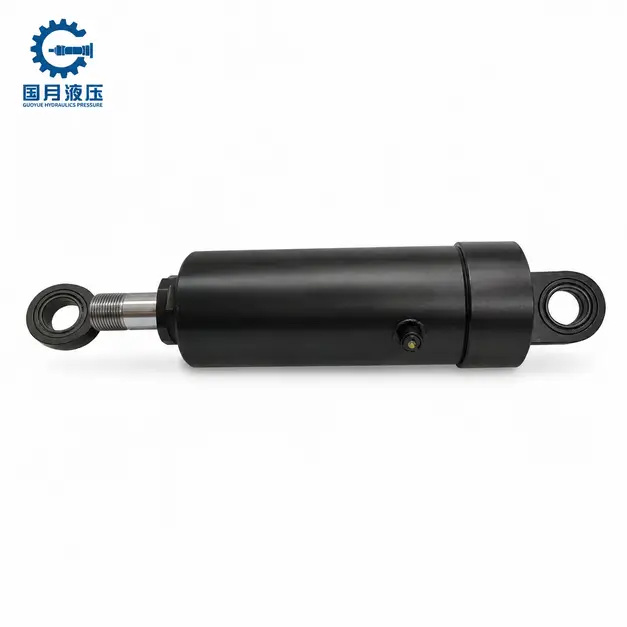
Take a common hydraulic extension-type cylinder as an example: pressurized oil enters the cylinder, pushing the piston rod outward; once the return oil passage opens, a spring or the load pushes it back. For instance, a spring-return cylinder uses the spring compressed during extension to return to its original position, while a load-return lifting cylinder uses the weight of the load to push it back. Note that single-acting cylinders can also be designed with hydraulic retraction; you should confirm the direction of operation before purchasing.
It is recommended to specifically check whether the cylinder can retract when unloaded. For example, a lifting cylinder that normally relies on the weight of the load to retract may fail to retract on its own once the load is removed. Similarly, do not assume that a spring-return cylinder can handle heavy workpieces; if the mechanism must be dragged during retraction, you should confirm with the manufacturer that the return force is sufficient.
Another common misjudgment is assuming the hydraulic cylinder is faulty if the piston rod does not retract after the oil supply is stopped. In reality, stopping the oil supply does not equate to opening the return line; if the fluid inside the cylinder cannot be drained, the spring or load cannot properly push it back. In such cases, you should first check the control valve position and return line according to the equipment manual.
Hydraulic Drive Extension and Retraction of Double-Acting Hydraulic Cylinders
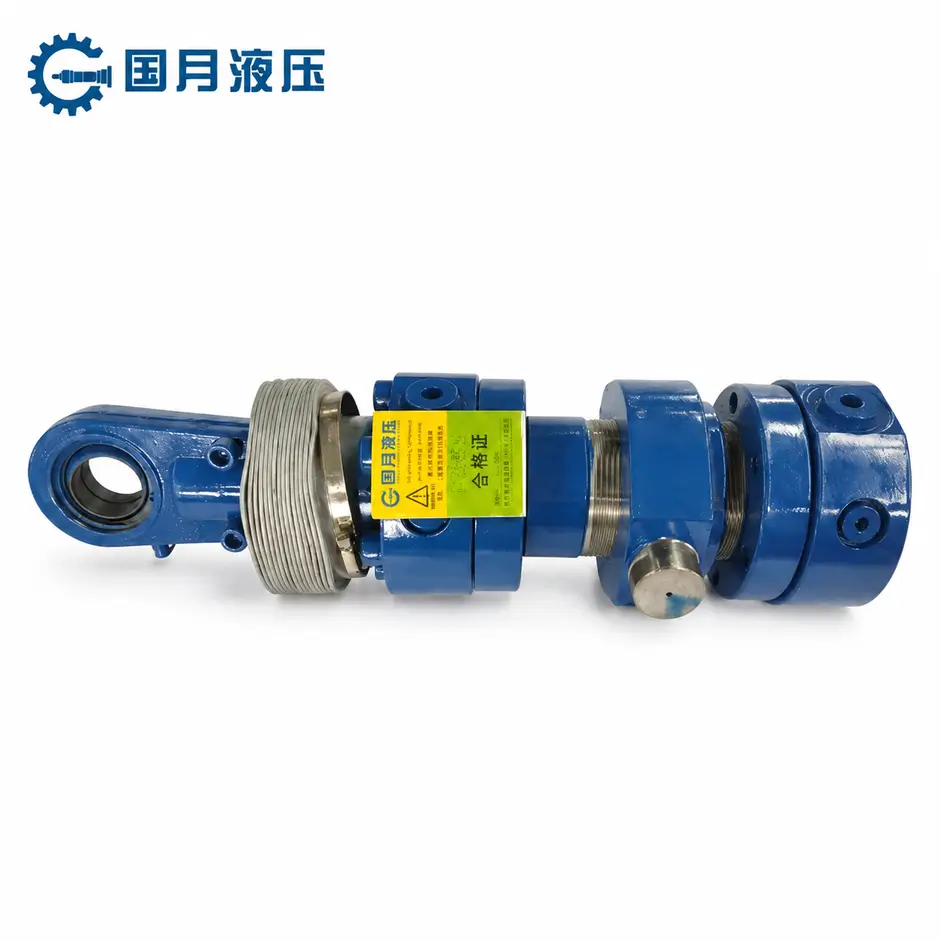
A double-acting hydraulic cylinder achieves extension and retraction by alternately supplying oil to both sides of the piston. In a typical single-rod configuration, the side without the piston rod is called the rodless chamber, and the other side is called the rod chamber: the cylinder extends when oil enters the rodless chamber and retracts when oil enters the rod chamber, while the opposite side must simultaneously discharge oil. You can think of it this way: the oil pressure alternately pushes the piston from both sides; it does not “suck” the piston rod back.
For example, in a mechanism that pushes or pulls a workpiece horizontally, there is no gravitational assistance for return after extension, and the return stroke must also overcome friction; a double-acting cylinder is better suited to meet these requirements. I recommend that you verify separately “how much force is required to push out” and “how much force is required to pull back”: for a standard single-rod double-acting cylinder, at the same supply pressure—and ignoring return pressure and friction—the retracting force is smaller than the extending force. You cannot assume that just because it can push, it will necessarily be able to pull back.
Single-Acting vs Double-Acting Hydraulic Cylinder Comparison
When selecting a hydraulic cylinder, we recommend you first consider this question: After the hydraulic cylinder pushes an object out, what causes it to return? If a spring or the load itself can reliably return it, a single-acting cylinder may be suitable; if you need to actively pull the workpiece back, a double-acting cylinder is usually more appropriate.
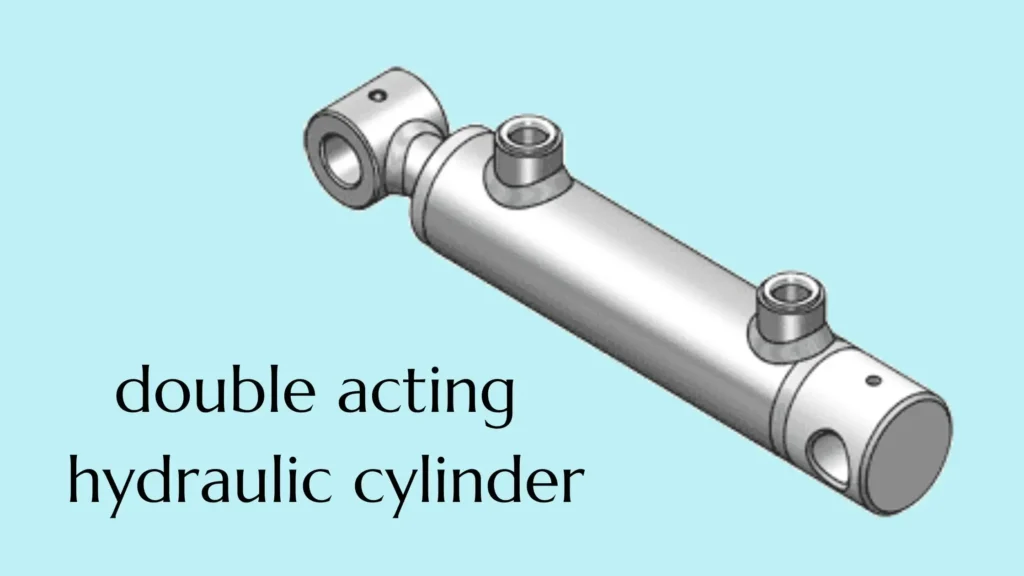
| Comparison Criteria | Single-Acting Hydraulic Cylinder | Double-Acting Hydraulic Cylinder |
|---|---|---|
| Motion | Hydraulically driven in one direction; spring or external force handles return | Both extension and retraction can be hydraulically driven |
| Ports and Piping | Typically 1 working port; fewer pipes | Typically 2 working ports; more pipes |
| Control Circuit | Basic circuit is relatively simple | Requires alternating oil supply and return to both sides |
| Output Force | Return force is limited by a spring or external force | Can actively push or pull, but the retraction force of a standard single-rod cylinder is typically lower than its extension force |
| Movement Speed | Retraction speed is more affected by load and resistance | Active speed control is easier in both directions |
| Positioning and Frequent Reciprocation | Must verify that retraction capability meets requirements | Bidirectional control is easier, but precision still depends on the entire system |
| Procurement and Energy Consumption | Simpler systems are typically less expensive but not necessarily more energy-efficient | Supporting components may be more expensive; energy consumption depends on actual operation |
| Maintenance and Service Life | Focus on seals, springs, and retraction performance | Focus on seals, piping on both sides, and control valves; service life cannot be determined by type alone |
The above describes common configurations; you should still verify port functions and connection methods based on the specific model.
Comparison of Port Configurations, Control Valves, Hydraulic Hoses, and Circuit Complexity
You can think of a single-acting system as “one hydraulic line handling both the inlet and return,” while a double-acting system typically uses two lines that operate alternately. For example, a mechanism that only lifts a workpiece and is pressed back by a reliable external force may only require a single-acting system; if the mechanism needs to push out horizontally and then actively pull back, a double-acting system is more direct. I recommend that you first determine the motion requirements and then compare piping costs to avoid adding an extra, complex return mechanism just to save on one pipe.
Comparison of Output Force, Speed, Control Precision, and Cycle Time
I recommend paying special attention to the return stroke, rather than focusing solely on the force required for extension. While pushing the workpiece out is straightforward, resistance from jamming or friction may occur during retraction, and a single-acting return spring may not be sufficient. A double-acting cylinder can actively retract the workpiece, but for a standard single-rod cylinder operating at the same supply pressure, the retraction force is typically less than the extension force; therefore, the thrust and pulling forces must be verified separately.
If your production line requires continuous back-and-forth motion, double-acting cylinders generally make it easier to control the cycle time; however, the notion that “using a double-acting cylinder will always result in faster and more accurate performance” is a misconception. For example, if the piston rod needs to stop at a specific midpoint, simply switching to a double-acting cylinder may not be sufficient—you may also need a position sensor and corresponding control system. It is more useful to specify requirements such as “extend for X seconds, retract for Y seconds, and allow a positioning tolerance of Z” rather than simply stating “fast speed and high precision.”
Comparison of Procurement Costs, Energy Consumption, Maintenance, and Service Life
In terms of cost, it is recommended to compare the entire equipment set rather than just the quoted price of the hydraulic cylinders. For example, single-acting cylinders are slightly cheaper, but having to wait for them to return slowly each time may affect output; double-acting configurations are more complex but may better align with the production cycle. Energy consumption must also be evaluated across the entire operating process: just because single-acting cylinders do not require active pressure supply during the return stroke does not mean the hydraulic pump does not consume electricity while idle.
Regarding service life, it is not possible to simply state which type is more durable. For example, if the piston rod is subjected to prolonged lateral pressure from workpieces, both types of structures may experience wear and leakage. Priority should be given to checking installation alignment and fluid cleanliness before inspecting the springs or piping on both sides based on the structure. If a supplier claims “longer service life,” ask them to specify the load, pressure, and cycle conditions under which that conclusion was reached.
What Are the Advantages and Disadvantages of Each Design?
The advantage of a single-acting cylinder is its simple system design; the limitation is that the return stroke relies on a spring or external force. The advantage of a double-acting cylinder is its ability to actively push and pull, but this comes at the cost of additional piping and control components. I recommend that you first determine what tasks the return stroke needs to perform, and then decide whether adding these components is worthwhile.
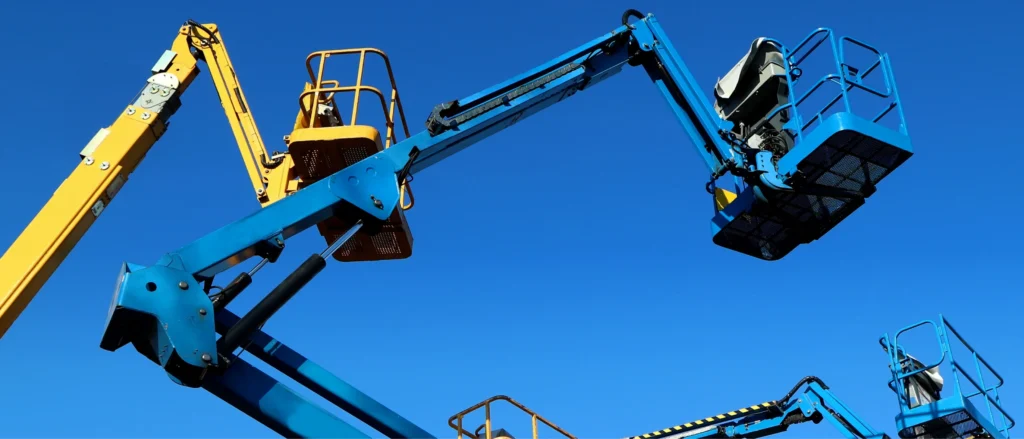
In what situations does the simple structure of a single-acting hydraulic cylinder offer an advantage?
If your equipment only needs to apply force in one direction and the return stroke is merely for reset, a single-acting cylinder is usually more cost-effective. It requires fewer hydraulic lines, and the basic control circuit is simpler, which reduces installation and troubleshooting efforts. For example, for a jacking device that is used occasionally—one that can reliably retract via a spring after completing its action and does not require a rapid return—a single-acting cylinder is a good option.
Its main drawback is that its return capability is limited by external conditions. For instance, if a lifting mechanism originally relied on the weight of a load to push the hydraulic cylinder back, it may fail to return on its own once the load is removed; similarly, a spring may not be strong enough to retract a heavier workpiece. I recommend you carefully check the following scenarios—no-load operation, changes in installation orientation, and approaching the end of the return stroke—to confirm that the cylinder can reset smoothly in all cases. If you need to add complex mechanisms just to ensure return, the original cost advantage of a single-acting cylinder may be lost.
In what situations is the superior control capability of a double-acting hydraulic cylinder worth the added system complexity?
If you need force in both directions, or if the round trip must be completed within a specified time, a double-acting cylinder is usually the better choice. For example, in a mechanism that pushes and pulls a workpiece horizontally, both the push and pull must overcome friction. Using a double-acting cylinder allows hydraulic pressure to drive each direction separately, eliminating the need to rely on the workpiece’s weight for return. It also facilitates active control of the return speed, making it suitable for equipment where return time affects the production cycle.
The trade-off is that it typically requires adding an additional hydraulic circuit and configuring valves to alternate oil flow and return on both sides, which increases installation and maintenance requirements. Another common misconception is that double-acting cylinders always provide precise positioning; in reality, stopping accurately at a specified position also depends on configurations such as control valves and position sensors.
Which Design Is Safer for Vertical Loads?
Both single-acting and double-acting cylinders can be used for vertical loads, but double-acting cylinders are not inherently safer. What really needs to be compared is whether the load can be lowered in a controlled manner, whether it can be held in place after stopping, and whether it will become uncontrolled in the event of a power failure or hose rupture. I recommend that you ask the supplier to explain the protective measures in these situations, rather than simply asking how much weight the hydraulic cylinder can lift.
Gravity Return, Load Holding, Balance Valves, and Failure Modes
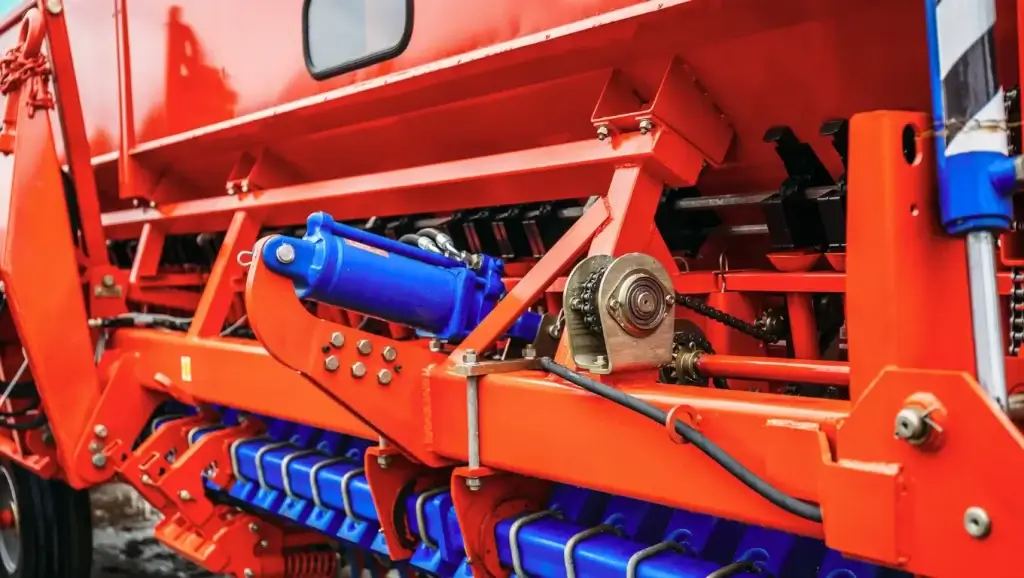
Single-acting cylinders can rely on the load’s weight for return travel and are suitable for mechanisms where gravity can reliably complete the descent. For example, a lifting platform uses hydraulic pressure to rise and relies on the weight of the platform and cargo to descend. However, just because gravity can bring it down doesn’t mean it will do so smoothly; descent control is still required. Although double-acting cylinders can actively drive the return stroke, they may also be pulled along and accelerate by the weight of the load; therefore, both types require circuits designed specifically for gravity-loaded applications.
A balancing valve is used to hold the load and control its movement; you can think of it as the “brake” in a hydraulic circuit: during descent, it limits the oil discharge from the load-bearing chamber to prevent the heavy load from causing the hydraulic cylinder to accelerate; when stopped, it helps prevent fluid from flowing out. It must be selected based on the load, flow rate, and circuit configuration; simply adding one does not guarantee safety, nor should you lower the set pressure on your own to speed up the descent.
If a load-holding valve is installed at a distance with a section of hose in between, a rupture in that hose could allow fluid to bypass the valve and drain directly, causing the load to drop. Therefore, such valves should typically be installed directly near the hydraulic cylinder’s load port and connected using a reliable, engineered connection to minimize unprotected hose runs.
It is also important to distinguish between sudden drops and slow descents. A pipe rupture may cause rapid, uncontrolled movement, while leaks in valves or seals may result in gradual position changes; the state after a power failure also depends on how the control valve resets. When purchasing, you should ask the supplier to explain how these three types of failures are handled, and have a professional verify compliance with safety acceptance procedures—do not rely solely on whether normal lifting and lowering operations are smooth.
If personnel need to enter the area beneath a raised load for maintenance, neither type of hydraulic cylinder should be relied upon solely to support the load with hydraulic pressure. For example, when replacing parts beneath a raised platform, you must first install mechanical supports or mechanical locks with sufficient rated capacity as specified in the equipment manual, then isolate the power supply and relieve residual pressure. A balancing valve can help control the hydraulic fluid but cannot replace mechanical supports during maintenance.
Which Cylinder Should You Choose for Common Applications?
Even for lifting or press-fitting applications, different return stroke requirements may call for different hydraulic cylinders.
Selection for Lifting, Clamping, Press-Fitting, Tipping, Steering, and Positioning Applications
- Lifting: First, confirm whether the cylinder can lower under no-load conditions. If the platform’s own weight can reliably drive the hydraulic cylinder back, a single-acting cylinder may be considered; if active retraction is required, a double-acting cylinder is more suitable. Both solutions should be equipped with descent control and load-holding measures appropriate for the load; a “double-acting” cylinder should not be relied upon solely as a fall protection measure.
- Clamping: Consider the resistance and time requirements for release. For example, if a fixture clamps a workpiece using hydraulic pressure and the spring can release it smoothly after depressurization, a single-acting cylinder is usually sufficient. If active pulling force is required for release, or if the production line must complete the release within a specified time, prioritize a double-acting cylinder to avoid the spring return being slowed by line resistance.
- Press-fitting: Don’t just consider the insertion; also consider whether the tool can retract. For occasional press-fitting of bearings or devices with low retraction resistance, a single-acting cylinder with spring-return can be considered; if the press head must overcome clamping force or friction during retraction, a double-acting cylinder is more suitable. You should verify the press-in force and the pull force required for retraction separately.
- Dumping: Focus on checking the return capability after unloading. Dump trucks commonly use single-acting telescopic cylinders—that is, hydraulic cylinders with multiple sections that extend sequentially—which rely on the body’s own weight to return after lifting the body. You must confirm that the empty body has sufficient return thrust throughout the entire return process; if a specific section of the motion requires active retraction, you should evaluate double-acting cylinders or specially designed return solutions.
- Steering: Typically, choose a design capable of providing force in both directions. For example, steering the vehicle left or right requires overcoming wheel resistance; a double-acting cylinder can provide both thrust and pull. When performing maintenance or replacement, select components that match the original steering system; do not substitute a different design simply because the mounting dimensions are similar.
- Positioning: First, distinguish between “pushing to a stop block” and “stopping in the middle.” If the workpiece is simply pushed to a fixed stop block and then returns via a spring, a single-acting cylinder may suffice; if adjustment is required back and forth between multiple positions, a double-acting cylinder offers better control. However, stopping precisely in the middle position typically requires a position sensor and corresponding control system—it cannot be achieved solely by replacing the hydraulic cylinder.
Practical Selection Decision-Making Process for OEMs and Maintenance Procurement Personnel
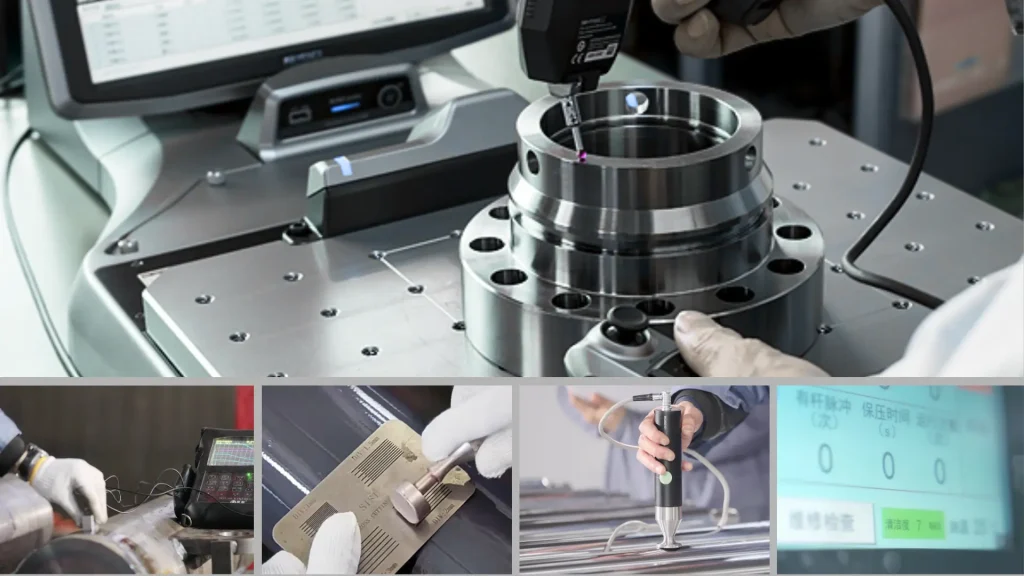
For OEMs (original equipment manufacturers), is active force required in both directions? If so, prioritize evaluating double-acting cylinders; if force is needed in only one direction, check whether a spring, gravity, or external mechanism can complete the entire return stroke. If the return force is unreliable, do not select a single-acting cylinder solely to reduce the cylinder cost.
Once reliable return is ensured, do the speed and position also meet requirements? If the return is simply a reset and time permits, you can continue evaluating single-acting cylinders; if the return stroke requires active speed control, overcoming variable resistance, or meeting strict production cycle times, double-acting cylinders are typically more suitable. Provide the supplier with the load, stroke, mounting orientation, round-trip time, and cycle frequency to narrow down the selection to a specific model.
For maintenance procurement, I recommend that you first verify the original model and circuit before considering replacement parts. In addition to bore diameter, rod diameter, and stroke, you should also verify the installed length after retraction, mounting dimensions, port configurations, pressure rating, seal materials, and return mechanism. If the old cylinder is simply returning more slowly, you should first check for return line resistance, spring issues, or mechanical binding; directly replacing it with a double-acting cylinder may require modifying valves and piping, and may not necessarily resolve the original fault.
What Specifications Must Be Compared Before Purchasing?
Before making a purchase, I recommend compiling your actual operating conditions into a single set of requirements so that suppliers can provide quotes based on the same criteria. If you compare only bore diameter, stroke, and price, you’re likely to end up with a hydraulic cylinder that “fits but doesn’t perform well.”
Force, Stroke, Speed, Mounting, Environment, and Cycle Life
- Output Force: Confirm how much force the cylinder can provide at your system’s operating pressure. The thrust specified by the manufacturer typically corresponds to a specific pressure; if your actual supply pressure is lower, the output force will also decrease. For double-acting cylinders, verify both the thrust and pull force separately; for single-acting cylinders, also confirm whether a spring or external load can complete the return stroke. Do not treat theoretical hydraulic pressure as the actual available force; you must also account for friction and return flow resistance.
- Stroke: It must be sufficient while also fitting within the available space. Stroke refers to the distance the piston rod travels from fully retracted to fully extended. For example, two cylinders with the same stroke may still have different installed lengths when retracted. You should verify both the retracted and extended dimensions; for long-stroke thrust applications, have the manufacturer check whether the piston rod is susceptible to bending under load.
- Speed: Replace “a little faster” with specific cycle times. For example, suppose a 200-millimeter stroke must be completed within 2 seconds; the average speed is 100 millimeters per second, but acceleration and deceleration must also be factored in. You should specify separate extension and retraction times so the supplier can verify the required oil flow rate and ensure that the ports, piping, and seals are compatible; for single-acting return strokes in particular, do not rely solely on the pump flow rate.
- Mounting Method: Confirm whether the hydraulic cylinder needs to swing with the mechanism. Fixed linear motion and swinging around a pivot point require different mounting arrangements. For example, if the mechanism’s angle changes continuously during operation but the hydraulic cylinder is rigidly fixed, the piston rod may be subjected to lateral forces—that is, forces pushing it sideways. You should provide installation drawings so the manufacturer can check for sticking or off-center loading throughout the entire stroke.
- Operating Environment: Specify oil temperature, fluid type, and external contact materials. Do not simply tell the manufacturer “indoor use” or “outdoor use.” For example, if a fixture is in prolonged contact with coolant, you must confirm not only the temperature but also whether the sealing materials are resistant to that fluid; outdoor equipment requires consideration of rain, dust, and corrosion. Sealing and protective configurations should be selected based on the actual environment.
- Cycle Life: First ask about test conditions, then review the cycle count. A cycle typically refers to a complete round trip, but you should confirm the counting method with the supplier. If the supplier承诺s a specific cycle life, you should ask for the corresponding pressure, load, stroke, speed, and oil temperature, as well as whether seals were replaced during the test period. Without these conditions, cycle life figures are difficult to compare.
Total Cost of Ownership Questions for Suppliers
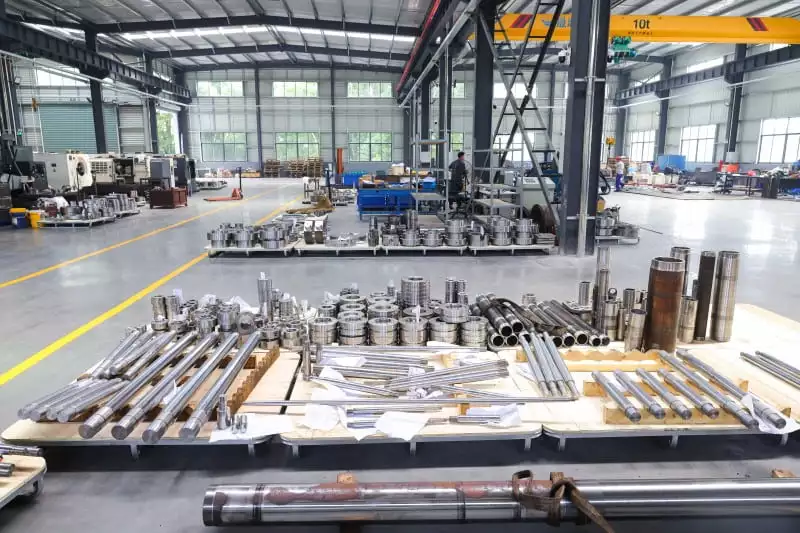
Total cost of ownership includes all expenses incurred from purchase, installation, operation, maintenance, and downtime. Confirm whether the quote includes all necessary components, such as valves, piping, mounting hardware, and sensors. When comparing single-acting and double-acting cylinders, calculate the total cost of the complete system required to perform the same task; avoid focusing solely on the unit price of the hydraulic cylinder.
You should also confirm the prices, lead times, and service channels for commonly used spare parts. For example, if a hydraulic cylinder is purchased at a low price but the seal kit has a long lead time, downtime losses could offset the savings made at the time of purchase. It is recommended to request a spare parts list, maintenance schedule, and written warranty coverage in advance, and to assess whether repairs are cost-effective by considering parts, labor, and the extent of damage.
Suppliers’ claims regarding energy consumption and maintenance also require substantiation. If a supplier claims greater energy efficiency, they should provide corresponding details on load, cycle time, and standby conditions; if they claim low maintenance, they should specify inspection items and maintenance intervals. You can compare this information alongside installation, spare parts, and downtime costs to determine which solution is more suitable for long-term use.
Frequently Asked Questions
Q1. Can a Single-Acting Cylinder Retract Under Load?
Yes, provided that the load force is directed toward the retraction path and is sufficient to overcome friction and return flow resistance. For example, a lifting cylinder can be retracted by the weight of the load, but the return flow path must first be opened, and the descent speed must be controlled. If you mean having the hydraulic cylinder actively pull the workpiece back, you cannot assume that the return spring has sufficient force; you should verify the return force and select a double-acting cylinder if necessary.
Q2. Can the Same Valve Operate Both Cylinder Types?
In some cases, yes, but they cannot be directly interchanged. Single-acting cylinders typically use a three-way valve, connecting the supply line, the hydraulic cylinder, and the reservoir; double-acting cylinders typically use a four-way valve, which includes an additional working oil line connecting to the opposite chamber. Some four-way valves can control single-acting cylinders when properly configured, but valves designed specifically for single-acting cylinders generally cannot directly drive a double-acting cylinder in both directions. You should have the supplier confirm the specific valve’s connection method, pressure and flow requirements, as well as the oil circuit status at rest; do not rely solely on the number of ports to make a determination.
Q3. Which Cylinder Type Uses Less Hydraulic Fluid?
If comparing the volume of fluid pumped into the hydraulic cylinder during a single complete stroke, in a standard circuit with the same bore, rod diameter, and stroke, single-acting cylinders typically use less fluid because oil is supplied in only one direction; double-acting cylinders require oil supply in both directions. However, hydraulic fluid is recirculated and is not consumed with every cycle. When selecting a reservoir, you must also consider changes in oil level during operation, line filling, and heat dissipation requirements; you cannot simply assume that a single-acting cylinder always requires a smaller reservoir.
Q4. Which Design Is Better for High-Cycle Automation?
When frequent reciprocating motion and strict control of cycle time are required, double-acting cylinders are typically preferred. They actively drive the return stroke, making it easier to minimize the impact of spring force and variations in return flow resistance on return time. For example, if an automatic fixture must release on schedule—otherwise the next workpiece cannot be loaded—double-acting cylinders are generally more suitable. You still need to provide the manufacturer with the cycles per minute, stroke, load, and continuous operating time to confirm sealing, cushioning, and heat dissipation capabilities; double-acting design alone does not guarantee a long cycle life.
Work with a IATF 16949 Certified Blind Rivet Manufacturer
Get High Quality Rivets Instead of Huck and Avdel Rivets
Explore Rivmate Cases

Hey There, I'm Melody!
We are a hydraulic cylinder manufacturer. For over 20 years, we have focused on producing reliable hydraulic cylinders. Need a hydraulic cylinder solution? Feel free to contact us.