Case Study: How Did a German Steel Mill Resolve Frequent Leaks in AGC Hydraulic Cylinders?
Home / How Did a German Steel Mill Resolve Frequent Leaks in AGC Hydraulic Cylinders?
The four-high rolling mill at a major German cold-rolling mill has been operating continuously 24 hours a day for an extended period. After approximately six months of operation, the European-brand AGC hydraulic cylinders began exhibiting issues such as internal leaks, reduced pressure retention capacity, and fluctuations in sheet thickness control.
After disassembling and inspecting the returned hydraulic cylinders and analyzing their operating conditions, Guoyue Hydraulics upgraded the sealing system, piston rod surface treatment, and quality verification procedures. Following these improvements, the service life of the hydraulic cylinders increased from approximately 6 months to about 12 months, and the spare parts delivery lead time was reduced from 12–16 weeks to approximately 4 weeks.

Customer Requirements and Project Objectives
The customer wishes to improve the operational stability of the AGC hydraulic cylinders without altering the existing four-high rolling mill structure.
Key objectives include:
- Reducing the risk of internal leakage
- Improving pressure holding capacity
- Stabilizing steel plate thickness control
- Extending the service life of the hydraulic cylinders
- Reducing unplanned downtime
- Shortening spare parts delivery lead times
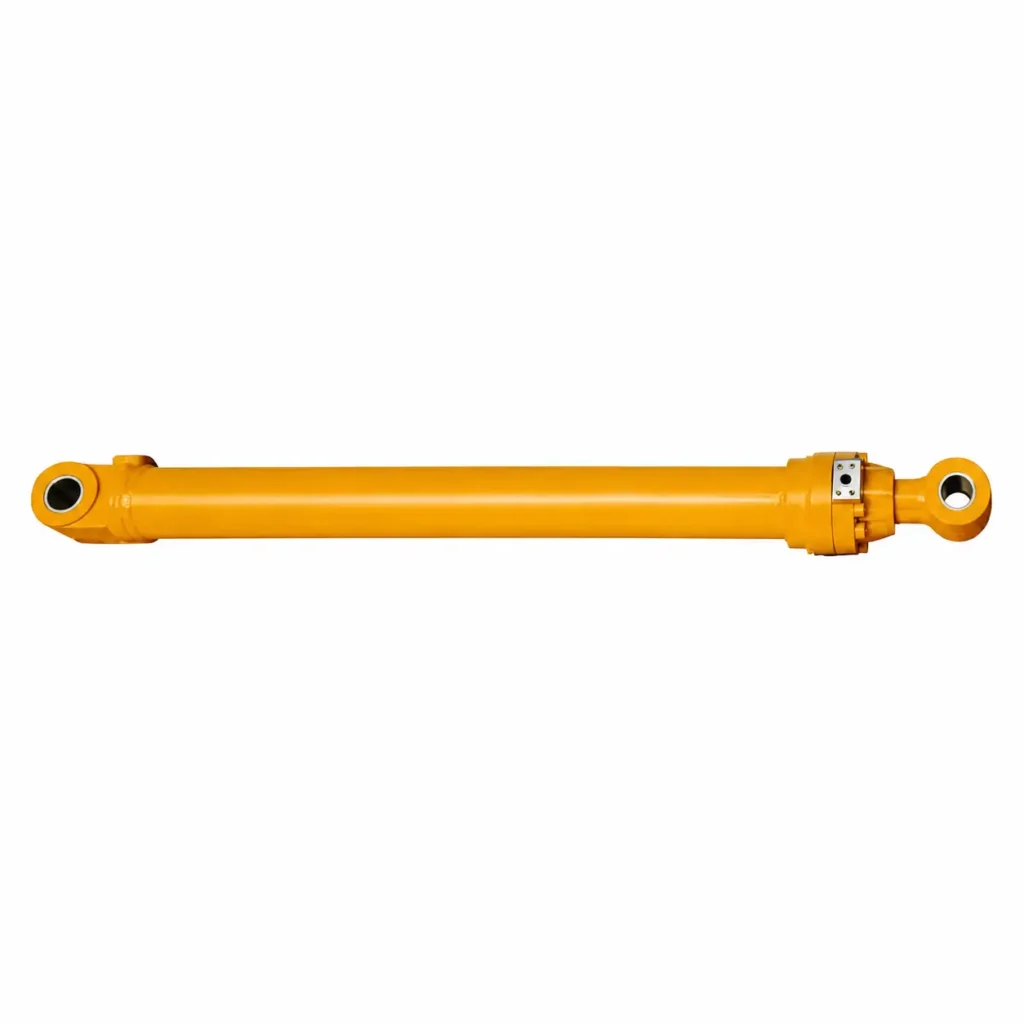
The AGC hydraulic cylinders are the core actuators of the rolling mill’s automatic thickness control system. Their sealing performance and response stability directly impact rolling accuracy and production efficiency.
Customer’s Specific Technical Requirements
1. Capable of Continuous High-Pressure Operation
The hydraulic cylinder must withstand an operating pressure of approximately 250 bar and be capable of 24-hour continuous operation.
2. Maintain Stable Control Accuracy
The AGC system requires rapid and precise adjustment of the roll position; therefore, the hydraulic cylinder must possess excellent responsiveness and pressure-holding performance.
3. Reduce Internal Leakage
The hydraulic cylinder must not exhibit significant internal leakage during frequent pressure changes and high-speed reciprocating motion.
4. Extend Maintenance Intervals
The customer aims to reduce the frequency of seal replacements and hydraulic cylinder disassembly and inspection, thereby lowering maintenance workload and minimizing downtime losses.
Key Challenges Faced by Customers
- After approximately six months of operation, the original hydraulic cylinders began to experience a decline in sealing performance, with internal leakage gradually worsening, leading to reduced control accuracy.
- The AGC system was unable to maintain the set pressure stably over extended periods, affecting the stability of the rolling mill’s control.
- Due to the decline in the hydraulic cylinders’ response performance, the AGC’s control accuracy was compromised, resulting in increased fluctuations in steel plate thickness.
- The hydraulic cylinders required repeated disassembly, inspection, and replacement of seals. A single unplanned shutdown could result in production losses of tens of thousands of dollars for the customer.
- The lead time for AGC hydraulic cylinders and accessories imported from Europe is typically 12–16 weeks, increasing the customer’s spare parts inventory and the pressure associated with downtime.
Analysis of the Problem Causes
After disassembling the returned hydraulic cylinders, the Guoyue Hydraulics engineering team identified two primary causes.
- 1. The original sealing system was unsuitable for high-frequency, high-pressure operating conditions: The original hydraulic cylinders used standard PTFE seals. Under frequent pressure fluctuations and high-speed reciprocating motion, the seals were prone to increased frictional heat, deteriorating material performance, accelerated seal wear, and increased internal leakage.
- 2. Insufficient wear resistance of the piston rod surface: Testing revealed that the thickness of the original chrome plating on the piston rod and the quality of the surface treatment were inadequate.
After prolonged operation, the surface roughness of the piston rod increased, accelerating wear on the seal lips and further exacerbating the leakage issues.
GY Hydraulics Engineering Solutions
To address the high-pressure, high-frequency operating conditions of AGC hydraulic cylinders, Guoyue Hydraulics employs Trelleborg or Parker sealing systems and upgrades the piston rods to HV1000 high-hardness chrome plating and HRC55 medium-frequency heat treatment. This effectively reduces friction, wear, and the risk of internal leakage.
Before leaving the factory, each hydraulic cylinder undergoes testing for 500 bar static pressure, 10,000 cycles, pressure hold, internal leakage, and dimensional concentricity to ensure long-term stable operation.
| Specification | Recommended AGC Hydraulic Cylinder Solution |
|---|---|
| Application Equipment | 4-High Cold Rolling Mill |
| Hydraulic Cylinder Type | AGC Hydraulic Cylinder |
| Bore Diameter | 320 mm |
| Piston Rod Diameter | 220 mm |
| Stroke | 900 mm |
| Working Pressure | 250 bar |
| Seal System | Trelleborg or Parker sealing system |
| Piston Rod Treatment | HV1000 high-hardness chrome plating, precision grinding and HRC55 induction hardening |
| Hydrostatic Pressure Test | 500 bar |
| Cycle Life Test | 10,000 cycles |
| Additional Quality Tests | Pressure holding test, internal leakage test, dimensional inspection and coaxiality inspection |
| Solution Objectives | Reduce internal leakage, improve pressure stability, extend service life and enhance strip thickness control accuracy |

Project Implementation Results
| Comparison Item | Before Optimization | After Optimization |
|---|---|---|
| Service Life | Approximately 6 months | Approximately 12 months |
| Internal Leakage | Occurred frequently | Nearly eliminated |
| Pressure Holding | Significantly reduced | Stable over long periods |
| Strip Thickness Control | Large fluctuations | More stable control |
| Lead Time | 12–16 weeks | Approximately 4 weeks |
| Maintenance Frequency | Relatively high | Significantly reduced |
Benefits Realized by the Customer
Through this AGC hydraulic cylinder upgrade, the customer achieved the following improvements:
- Service life increased to approximately twice the original
- Reduction in unplanned downtime caused by hydraulic cylinder failures
- Improved stability in steel plate thickness control
- Lower costs for seals and maintenance
- Shorter spare parts lead time to approximately 4 weeks
- Lower total cost of ownership for hydraulic cylinders

Hey There, I'm Allen!
We are a hydraulic cylinder manufacturer. For over 20 years, we have focused on producing reliable hydraulic cylinders. Need a hydraulic cylinder solution? Feel free to contact us.